Guellala, the pottery capital of Djerba
Perched on the south-western heights of Djerba, the village of Guellala is the historic heart of the island’s pottery tradition. Clay has been worked here for centuries — some sources speak of a tradition going back a thousand years or more — with gestures passed down from one generation to the next. Visiting Guellala is like stepping into an open-air workshop where every wood-fired kiln, every potter’s wheel and every jar tells a piece of the Djerbien story. For official figures, see UNESCO heritage for Tunisian pottery (Sejnane).
From our Muslim-friendly villas in Tezdaine (Midoun), a half-day in Guellala is easy to plan: allow 25 to 30 minutes by road to cross the island. The ideal cultural outing, with family or as a couple.
A history rooted in clay
The origins of Guellala pottery reach far back in time: researchers point to Phoenician and later Berber influences, in a region where the local subsoil clay proved particularly well suited to wheel-throwing. Family transmission is the heart of the craft — the turn of the wheel, the wood firing and the exact proportions of the clay are learnt as a child, alongside the elders. This is what gives Djerbien pottery its aesthetic coherence: shapes evolve slowly, out of loyalty to a clear identity.
Traditional techniques
- Local clay: extracted from nearby quarries, often reddish or ochre, cleaned and kneaded by hand.
- Wheel-throwing: on a traditional wheel, jars, dishes and water jugs take shape in just a few minutes.
- Drying: several days in the open air, in the shade, to prevent cracks.
- Firing: in traditional kilns fuelled with olive wood, at high temperature, for many hours.
- Decoration: some pieces are left raw; others are glazed or hand-painted with geometric or floral motifs inherited from the Berber visual repertoire.
This is not an industry but a craft, with its slow pace and its embraced imperfections. Each piece is slightly different from its neighbour — and that is precisely what gives it its value.
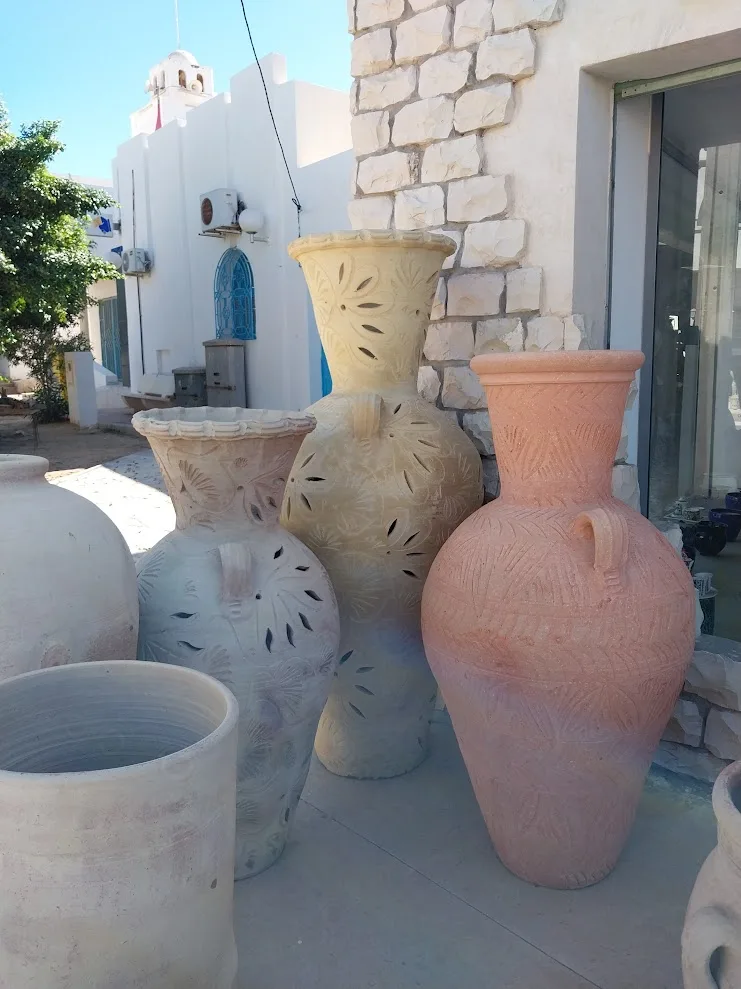
Typical Guellala pieces
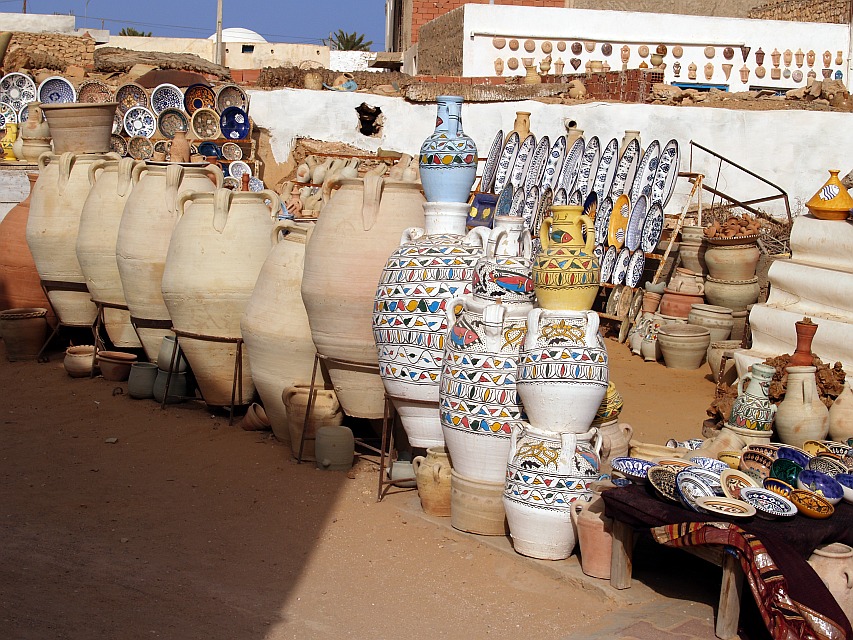
- Olive oil jars: large or very large, traditionally used to store oil, wheat or olives. Today they make beautiful interior or garden decoration pieces.
- The gargoulette (couscous pot): in two parts, to steam couscous in the pure North African tradition.
- Tajine dishes: for slow-cooked meals, with a distinct Djerbien identity.
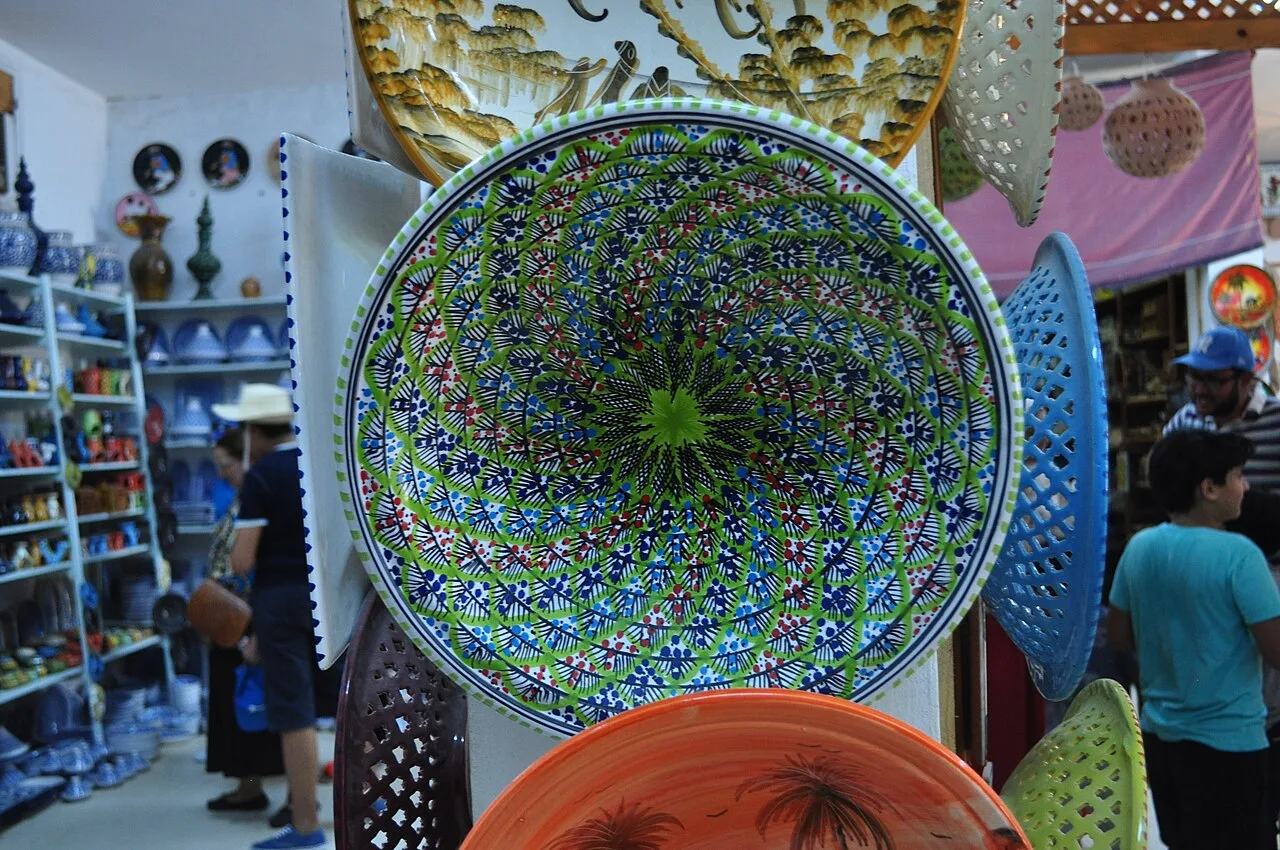
- Plates and bowls: often glazed, decorated with colourful geometric motifs.
- Decorative objects: lamps, vases, small pots, figurines — perfect lightweight souvenirs.
We have a soft spot for the pieces you actually use: a jar on a terrace, a dish on the table — the object keeps on living and keeps on passing something of Djerba along with it.
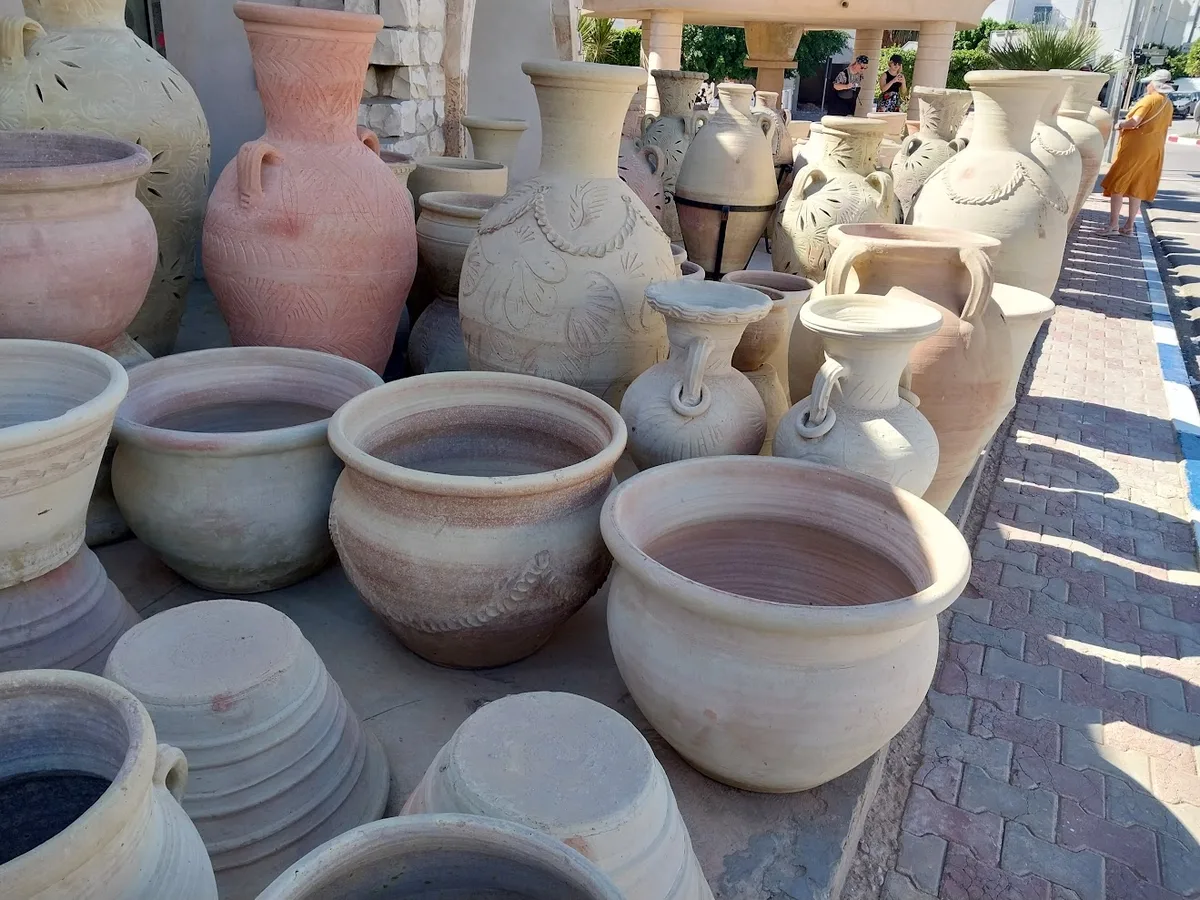
Visiting a workshop: what to expect
Several family workshops in Guellala welcome visitors, usually without an appointment. The visit follows the same pattern: greeting by the potter, a wheel demonstration (a piece is thrown in front of you in a few minutes), a look at the wood-burning kiln, and then the showroom.
- The visit is usually free, but a modest purchase is a natural way to thank the craftsman for his time.
- Children love it: the wheel, the clay, the fire — the perfect ingredients for a memorable outing.
- Wear clothes you do not mind getting clay on.
- Late morning or mid-afternoon are the best times: you will see potters actually at work, not just the sales area.
Rather than naming a specific workshop — ownership and opening hours change over time — we would rather invite you to wander through the village and push the door of the one that catches your eye.
The museum and village heritage
The village is also home to a museum dedicated to Djerbien traditions (costumes, jewellery, ceremonies, pottery). Its opening status has varied in recent years: check with your host or locally before making a special trip for it. Either way, Guellala is worth the journey for its workshops and its sweeping views over the south of the island.
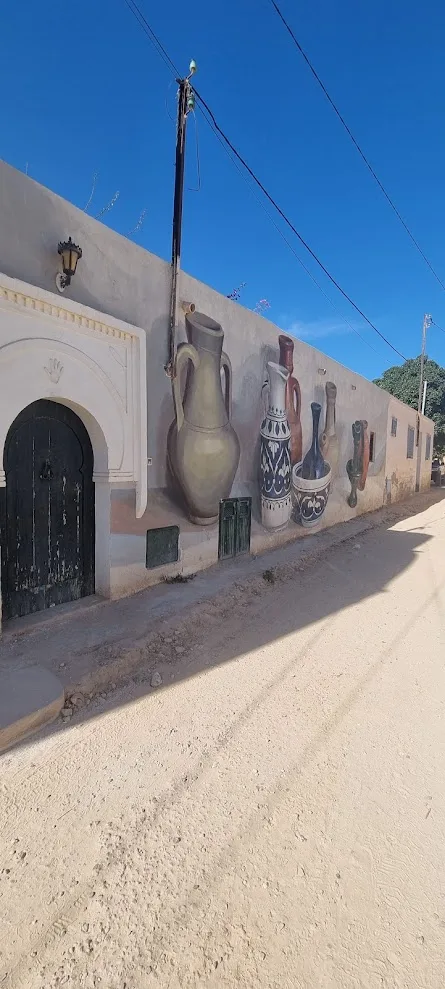
How to get there from Midoun
- Rental car: by far the easiest. 25 to 30 minutes on well-maintained roads.
- Taxi: agree beforehand on a round trip with waiting time.
- Private driver for the day: ideal to combine Guellala, Djerbahood and Houmt Souk.
Buying without surprises
Prices in Guellala are noticeably gentler than in the tourist shops of Houmt Souk. Some indicative ranges (in Tunisian dinars):
- Small decorative object: 10 to 30 TND
- Glazed plate or bowl: 15 to 50 TND
- Tajine dish: 30 to 80 TND
- Gargoulette: 50 to 150 TND
- Large jar: 100 to 500 TND depending on size
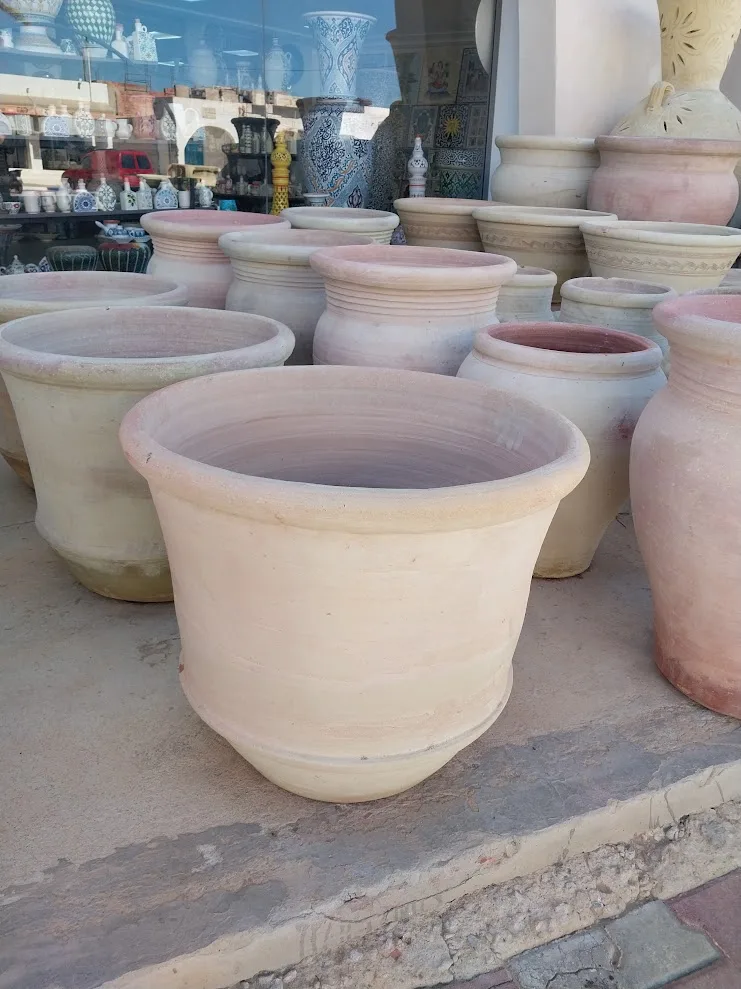
- Negotiation is part of the local culture, always with respect and a smile (10 to 20% margin is customary).
- Favour workshops where you can see the potter at work: you know you are buying a genuine Guellala piece.
- For the journey home by plane, workshops will carefully wrap your pieces. For very large jars, ask about shipping — or choose a piece that fits your luggage.
- Ask whether a dish or gargoulette is oven-safe: some pieces are purely decorative.
Going further
- Djerbahood, the open-air museum village — easy to combine on the same cultural day.
- Traditional Djerbien cuisine — your Guellala jar has its place on the table.
- Sidi Yati beach — 6 minutes by car from our villas.
- Family holidays in Djerba — the essentials to plan your stay.
A Muslim-friendly stay just a short drive from Guellala
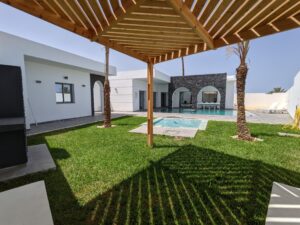
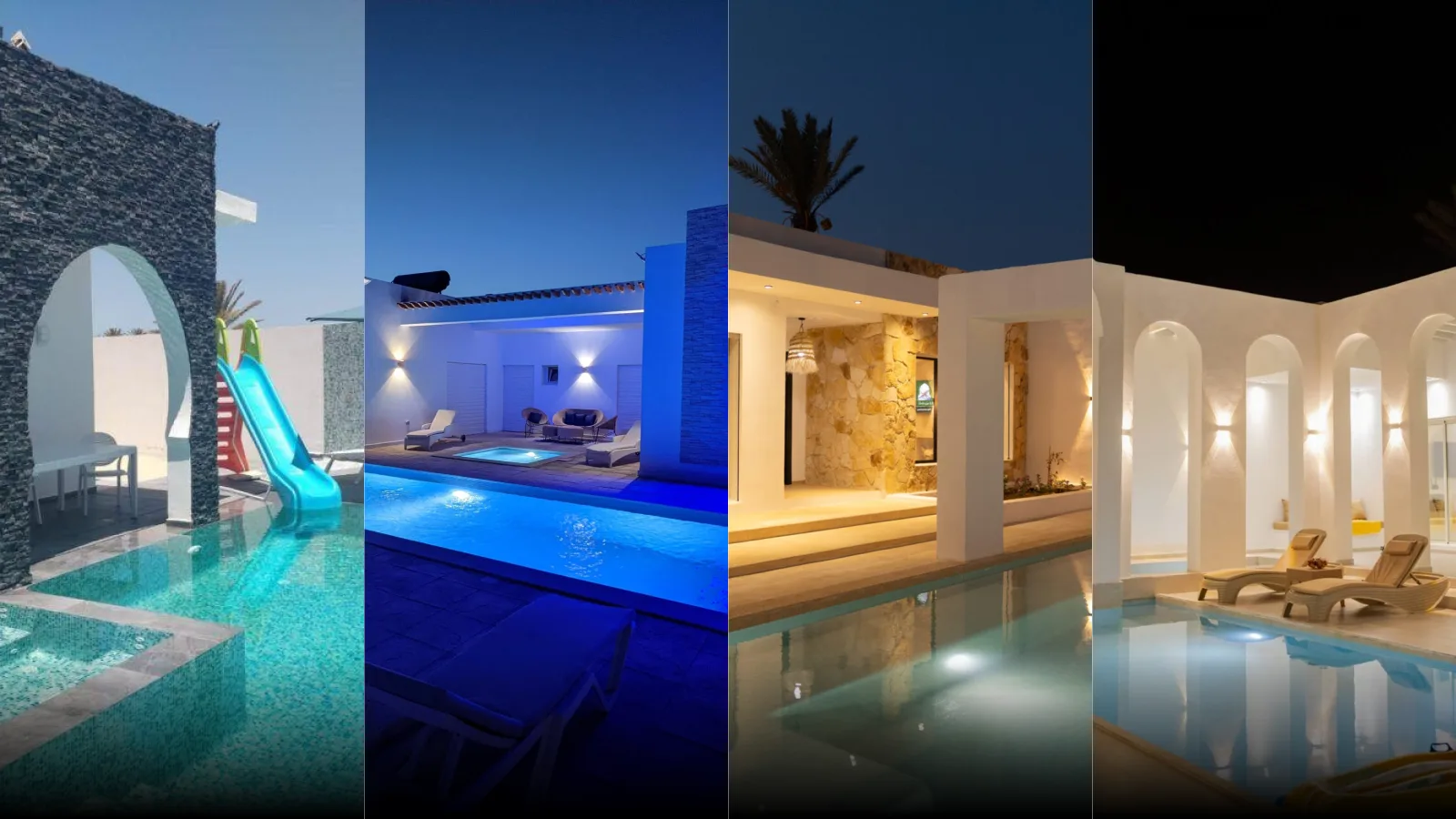
From Ethic Village Djerba, in Tezdaine (a sought-after area of Midoun — “the palm trees” in Berber), Guellala is less than half an hour away. Our four private villas with no-overlook private pools are designed for families and couples seeking privacy: a prayer mat and qibla indicator in every villa, a strictly alcohol-free residence (internal rules, no exceptions), two neighbourhood mosques within a few minutes’ walk, and breakfast included.
You head out in the morning to pick a jar in Guellala, come back in the early afternoon, and the pool is waiting for you, shielded from any outside view. No compromise on your values, and all the gentleness of Djerba right at the end of the road. Discover our Muslim-friendly family holiday page or our four villas. We will be delighted to welcome you.