
When contemporary art meets a centuries-old village
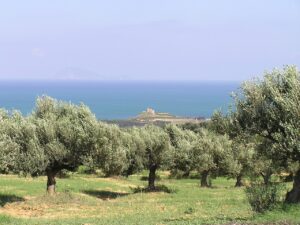
In 2014, the village of Erriadh, about ten kilometres south of Houmt Souk, became the setting for an artistic project of rare scale. More than 150 artists from around thirty countries were invited to transform the whitewashed walls of this ancient village into an open-air gallery. The Djerbahood project put Djerba on the global street art map in just a few weeks of artist residency, and turned it into a sought-after stop for contemporary art lovers looking for a setting far removed from big-city walls. See also Djerbahood project by Galerie Itinerrance (the original curators).
The story behind Djerbahood
Djerbahood did not appear by chance. The project was initiated by the Paris-based gallery Itinerrance, led by curator Mehdi Ben Cheikh, who had already created the famous “Tour Paris 13” the year before. Drawn to Erriadh’s atmosphere, its multicultural heritage and the beauty of its alleys, Ben Cheikh organised a collective international artist residency there in the summer of 2014. For several weeks, artists lived on site, met the villagers and painted directly onto the walls with the owners’ consent.
The founding idea was not to parachute in a “floating” street art festival, but to let the works dialogue with traditional Djerbian architecture — blue doors, bright whitewash, narrow lanes and inner courtyards. More than a decade later, some works have taken on a patina, others have faded under sun, rain and salt, and a few have been restored. This evolution is part of the living identity of the place: a museum that breathes with its village.
Key artists and their works
Djerbahood owes its impact to a gathering of major names in world street art. Among the artists whose works remain visible or well documented on site:
- Shepard Fairey (OBEY) — the American artist famous for the Barack Obama “Hope” poster, who contributed geometric compositions in his signature red and cream palette.
- eL Seed — French-Tunisian pioneer of “calligraffiti”, blending Arabic calligraphy with graffiti; his Erriadh pieces make poetic script and local architecture speak together.
- Inti — Chilean muralist whose elongated figures drawn from Andean folklore are recognisable by their saturated colours.
- Stinkfish — Colombian stencil artist whose layered portraits, overlaid with psychedelic patterns, animate several village façades.
- Fauxreel — Canadian artist known for large-scale human presence, mixing paste-ups and painting.
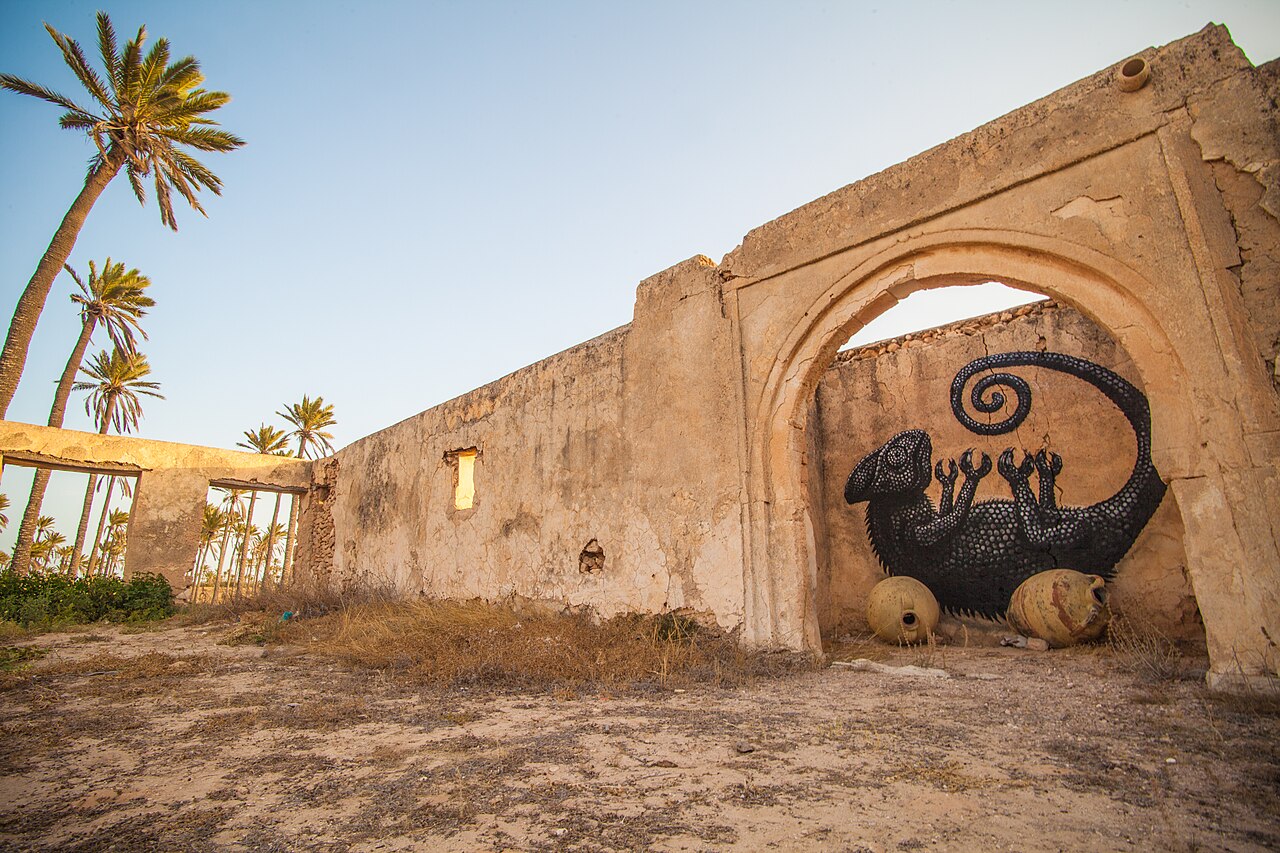
- ROA — Belgian artist famous for his monumental black-and-white animals.
- Bom.k, Seth, Add Fuel, Swoon and many others also contributed to this mosaic of visual worlds.
The exact number of works varies depending on sources (between 150 and 250, depending on how you count smaller pieces). What matters is less exhaustiveness than wandering: each alley holds a surprise.
A walk through Djerbahood in pictures
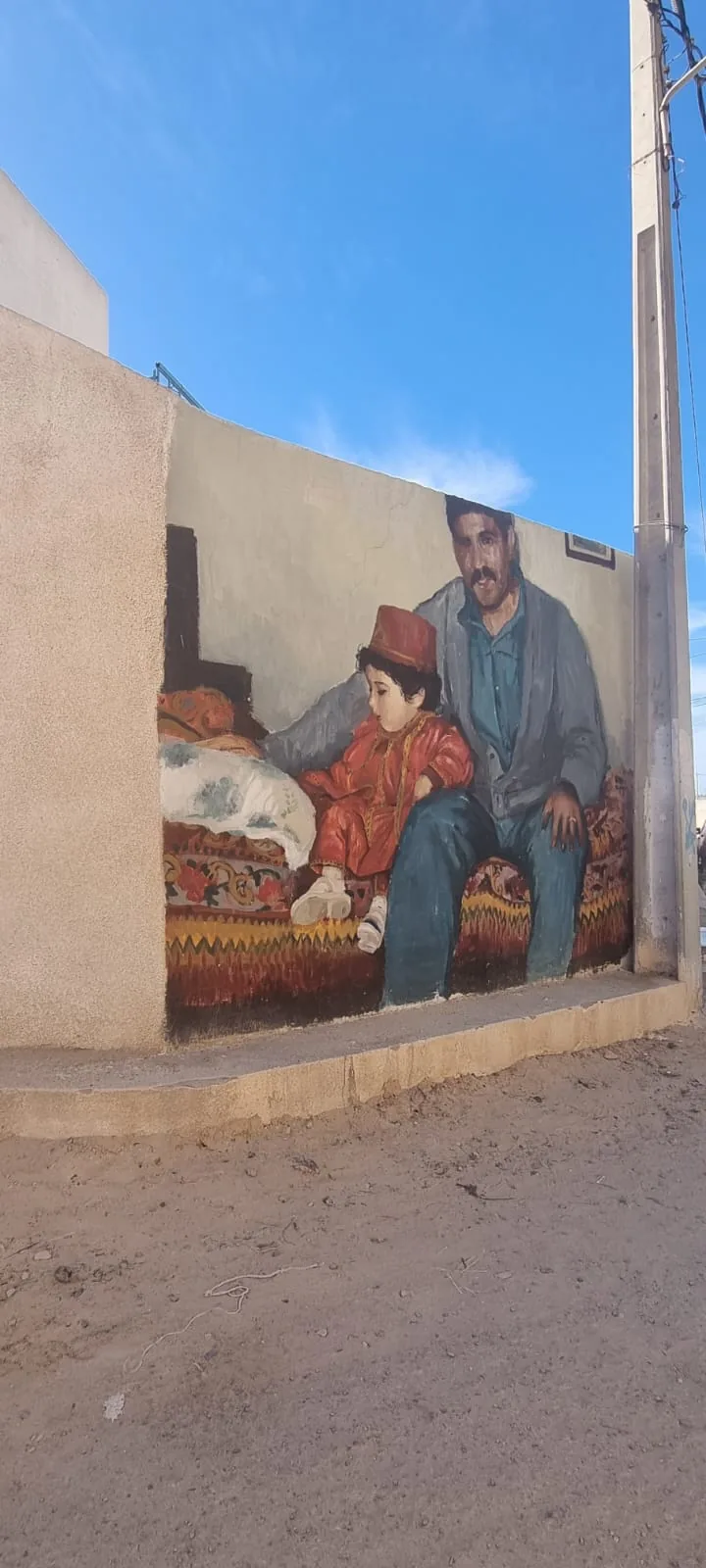
A few murals spotted in Erriadh — figurative, calligraphic, geometric and trompe-l’œil — a small sample of what you will discover as you wander the alleys. Click any image to enlarge.
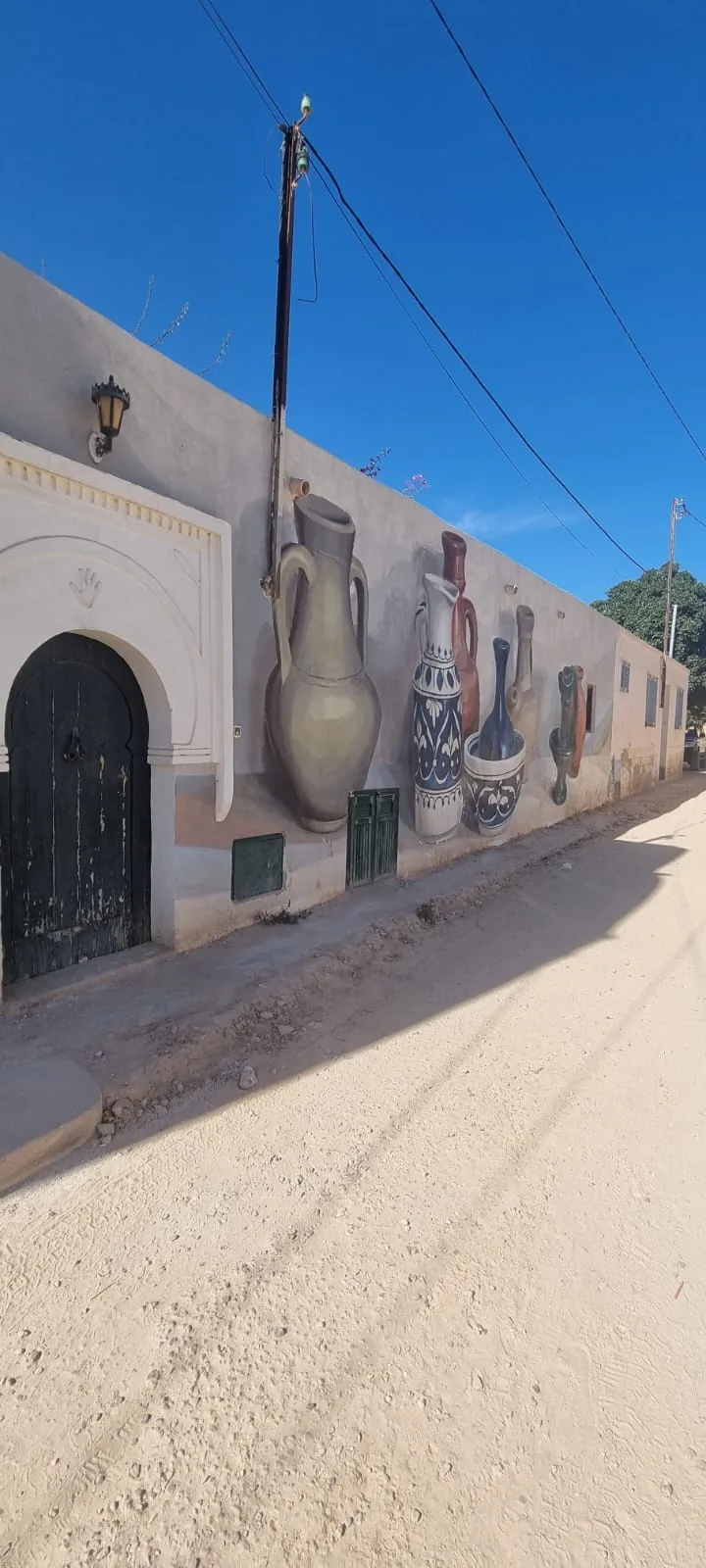
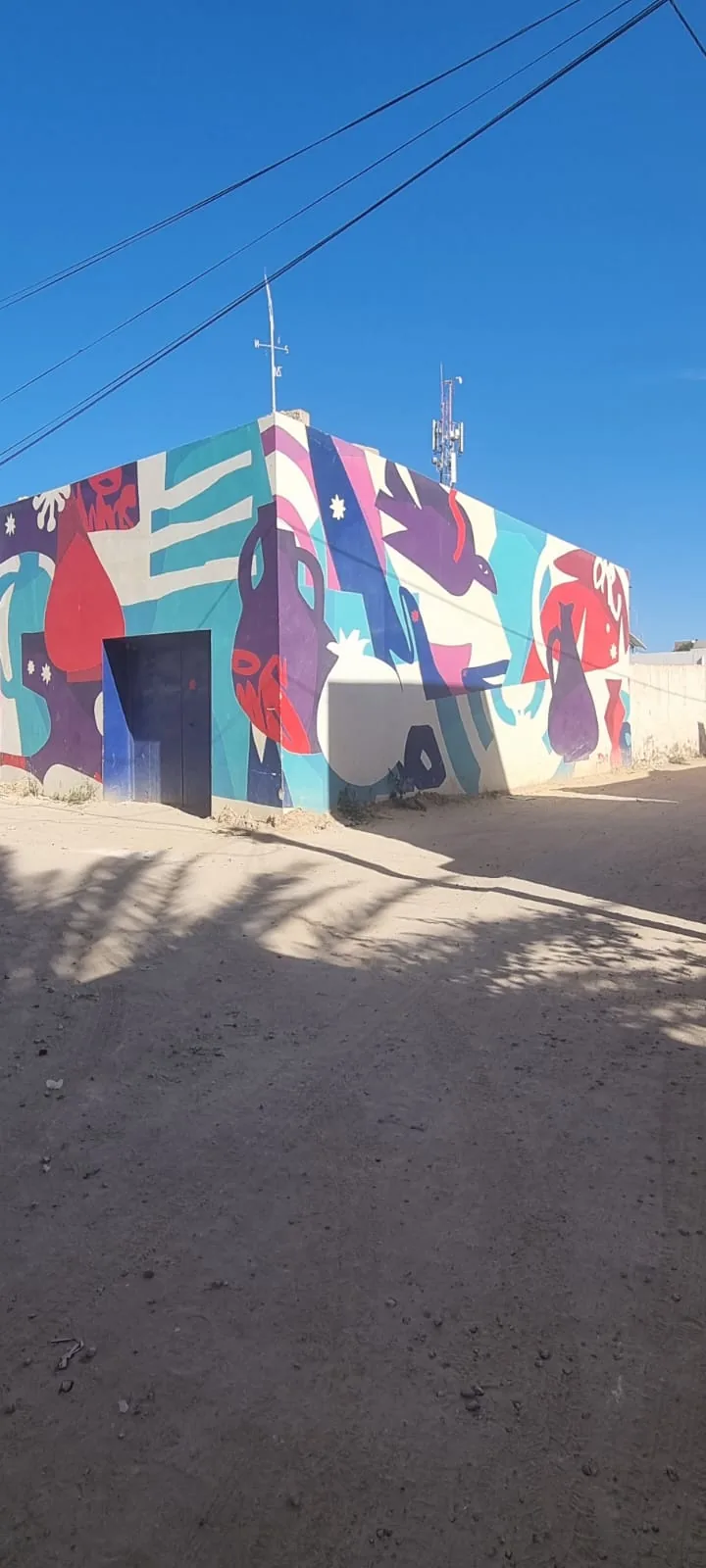
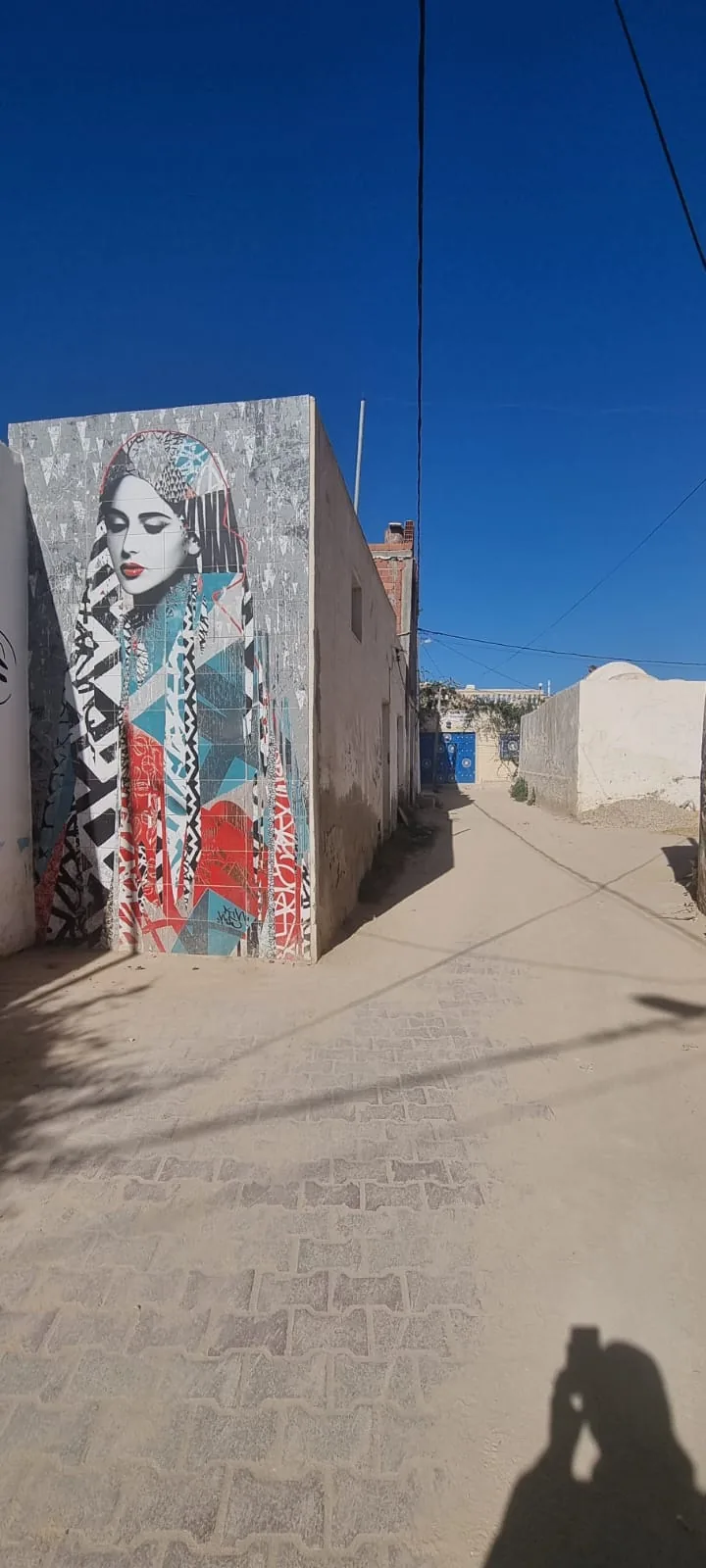
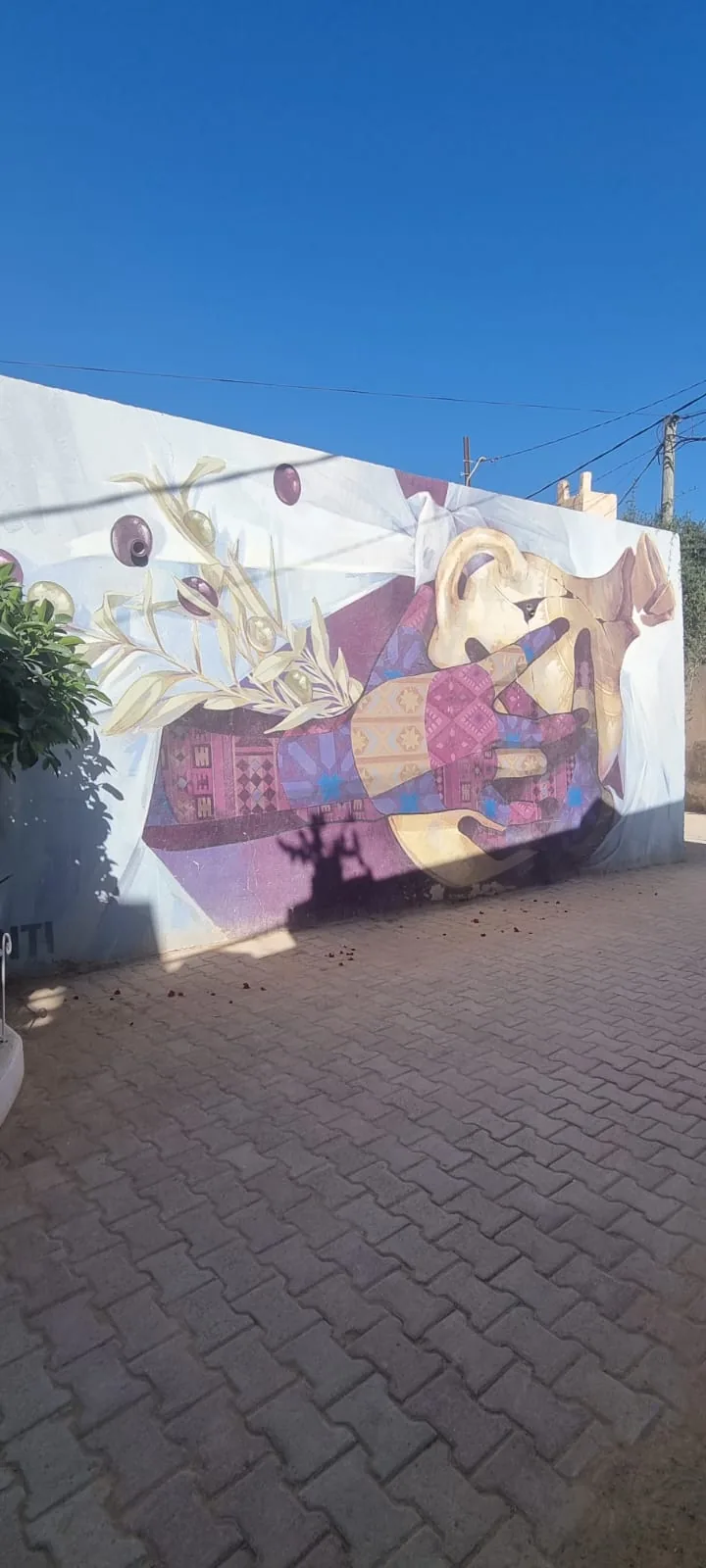
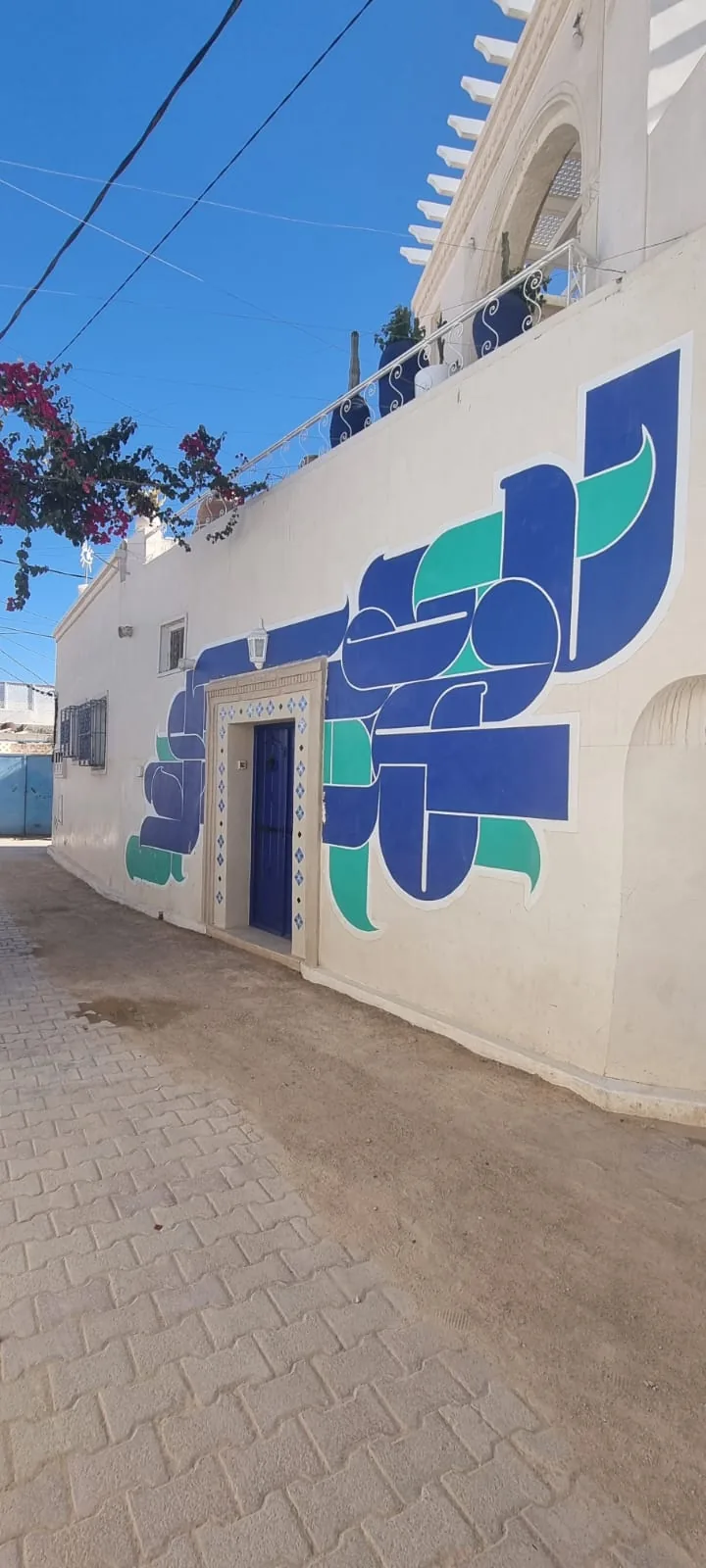
Erriadh, a village steeped in history
Before becoming “Djerbahood”, Erriadh was and remains a living village, deeply rooted in Djerba’s long history. Historically also known as Hara Seghira, it is home to one of the oldest synagogues in North Africa, El Ghriba, whose foundations, according to local tradition, go back to antiquity. This religious heritage reflects the long-standing coexistence between Muslim and Judeo-Berber communities on the island — a piece of context that visitors can discover as a heritage site, always respecting its status as an active place of worship.
The white domed houses, carved wooden doors, low arcades and inner courtyards offer an architectural setting of great coherence. The Djerbahood artists, for the most part, took this into account: the works fit into the architecture instead of overwhelming it.
How to reach Djerbahood from Ethic Village Djerba
Erriadh is about 10 minutes by car from our private family residence Ethic Village Djerba, set in the popular Tezdaine area of Midoun (“The Palm Trees” in Berber). The drive is straightforward: take the main road out of Midoun toward Houmt Souk and follow signs for “Erriadh” or “Djerbahood”.
Parking is on the edge of the village; you then walk into the alleys, which is part of the charm. We can also arrange a private car transfer (optional, extra fee) for guests who prefer not to drive.
Practical tips for your visit
- Duration: allow 1.5 to 2 hours for a relaxed walk. Enthusiasts can easily spend half a day.
- Best time of day: early morning (before 10am) or late afternoon (after 4pm) to avoid the heat and enjoy soft light ideal for photos.
- Summer: bring water, a hat and sunscreen — the white walls reflect a lot of light.
- Footwear: the ground can be uneven, closed and comfortable shoes are recommended.
- Dress: Erriadh is a lived-in village, with residents from both Muslim and observant Jewish communities. Modest clothing (shoulders and knees covered) is the respectful norm.
- Photos: the artworks can be photographed freely. For people, always ask for permission first.
- Access: free, open at all times, no ticket required.
Combining Djerbahood with other visits
Erriadh fits well into a full day of discovery on the island. A few suggestions that make sense:
- Houmt Souk (15 min by car) — the island’s capital, its souks, restored fondouks and fish market.
- Sidi Yati beach — our favourite beach, 6 minutes by car from the residence. See our Sidi Yati practical guide to make the most of it.
- Religious heritage — Erriadh is home to El Ghriba synagogue, one of the oldest in North Africa, which can be visited as a heritage site, with full respect for its status as a place of worship and its access rules.
- Lunch stop — several small family-style restaurants operate around Erriadh and Midoun. To understand the island’s flavours, read our article on traditional Djerba cuisine.
Street art in a traditional village: a thoughtful dialogue
Bringing an international artistic project into a traditional Tunisian village is never trivial. At Erriadh, the project was carried out with the agreement of wall owners and local authorities. More than ten years on, the outcome is nuanced: Djerbahood has given fresh economic life to a village that was slowly emptying, by attracting a flow of visitors well beyond the classic beach circuits.
The diversity of the works mirrors the diversity of the world’s visual heritage; alongside Arabic calligraphy, some murals focus on geometric and floral patterns, while others depict figures and characters. Visitors are free to build their own reading of the place. What remains is the intent of dialogue: between a lived-in village, a plural history and a contemporary artistic gesture.
A Muslim-friendly stay within easy reach of Djerbahood
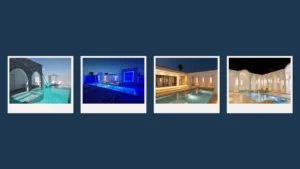
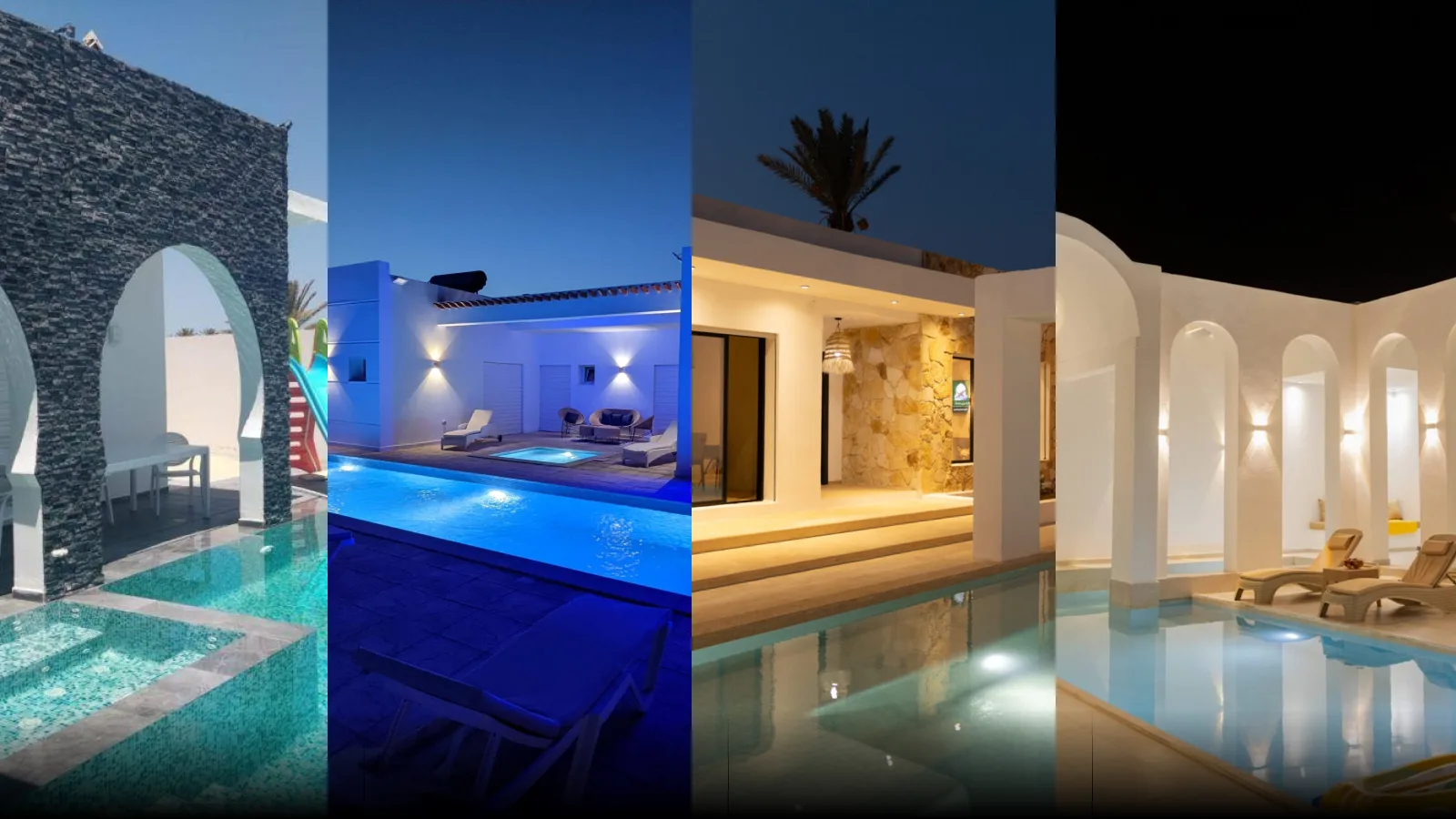
Visiting Djerbahood with the family calls for a comfortable base nearby, aligned with your values. That is what we offer at Ethic Village Djerba: a private family residence, 10 minutes from Erriadh, designed for families looking for a genuine Muslim-friendly setting without compromise.
- Four private villas with no-overlook private pool — Diamant, Saphir, Opale and Jade.
- Prayer mat and qibla indicator in each villa.
- Strictly alcohol-free residence — house rules, no exception.
- Mosques within walking distance: Troujette in 3 minutes, Khalid Ibn Al Walid in 5 minutes.
- Breakfast included and welcome meal on arrival, halal cuisine.
You may also enjoy our Djerba family holidays guide to plan a broader itinerary.
Djerbahood is not just a collection of artworks; it is an experience of light, wandering and encounter with a different face of Djerba. We would be delighted to welcome you to Ethic Village Djerba for this chapter of your journey.