Why Djerba is the perfect base for Southern Tunisia day trips
Djerba is not just an island of fine sand and whitewashed lanes. Its position, right at the threshold of Southern Tunisia, makes it the natural gateway to the desert. In a single day you can reach the Berber ksour of Tataouine, the troglodyte homes of Matmata, or the golden dunes of Douz. For a family staying in a halal-friendly villa in Djerba, these day trips from Djerba are the perfect complement to a beach holiday: a few restful days at the villa, one or two adventurous days in the South, then back to the pool. For more detail, see Tunisian National Tourist Office (ONTT).
The Ajim → Jorf ferry (roughly a 20-minute crossing) is the shortest route to the mainland, but not always the fastest — especially in summer, when ferry queues get very long. We recommend the Roman causeway instead. From there, Matmata is 2h15 away, Tataouine around 2 hours, and Douz about 3 hours. Everything is doable in a single day — or better, across two days with a night in the desert.
Tataouine and the Berber ksour: heritage first
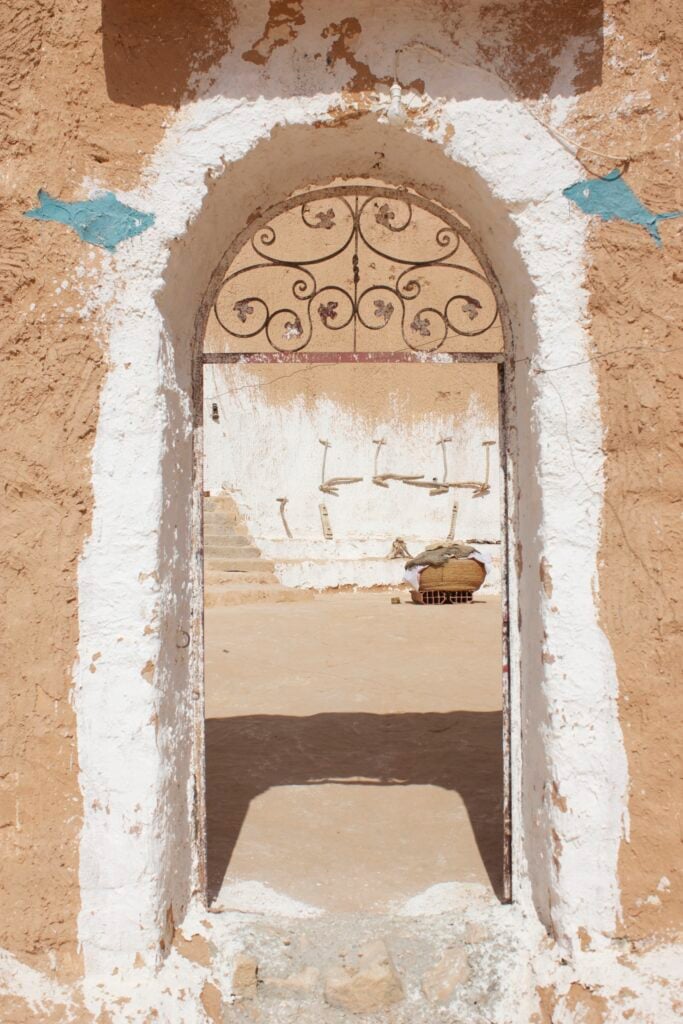
About 120 km from Djerba, the Tataouine region is home to the finest ksour (singular ksar) in Southern Tunisia: fortified Berber granaries built of ghorfas (vaulted cells) stacked over several levels, historically used to store grain, oil and provisions.
- Ksar Ouled Soltane — the most photogenic. Its arched ghorfas, arranged around a central courtyard, rise up to four levels. A masterpiece of vernacular architecture.
- Chenini — a Berber village clinging to a ridge, cliff-carved homes, the white mosque of the Seven Sleepers.
- Douiret — an abandoned village of troglodyte dwellings, mineral silence, sweeping views over the valley.
These sites tell the story of Berber tribes long before they became famous for anything else. A cultural side note: Ksar Ouled Soltane and Ksar Hadada were used as filming locations for the Star Wars saga (the slave quarters of Mos Espa, on the planet Tatooine). That is a fun fact, but the real reason to visit remains the Berber heritage — the way people built to survive the heat and raids, century after century. See also Djerba’s UNESCO World Heritage inscription.
Matmata and the troglodyte dwellings
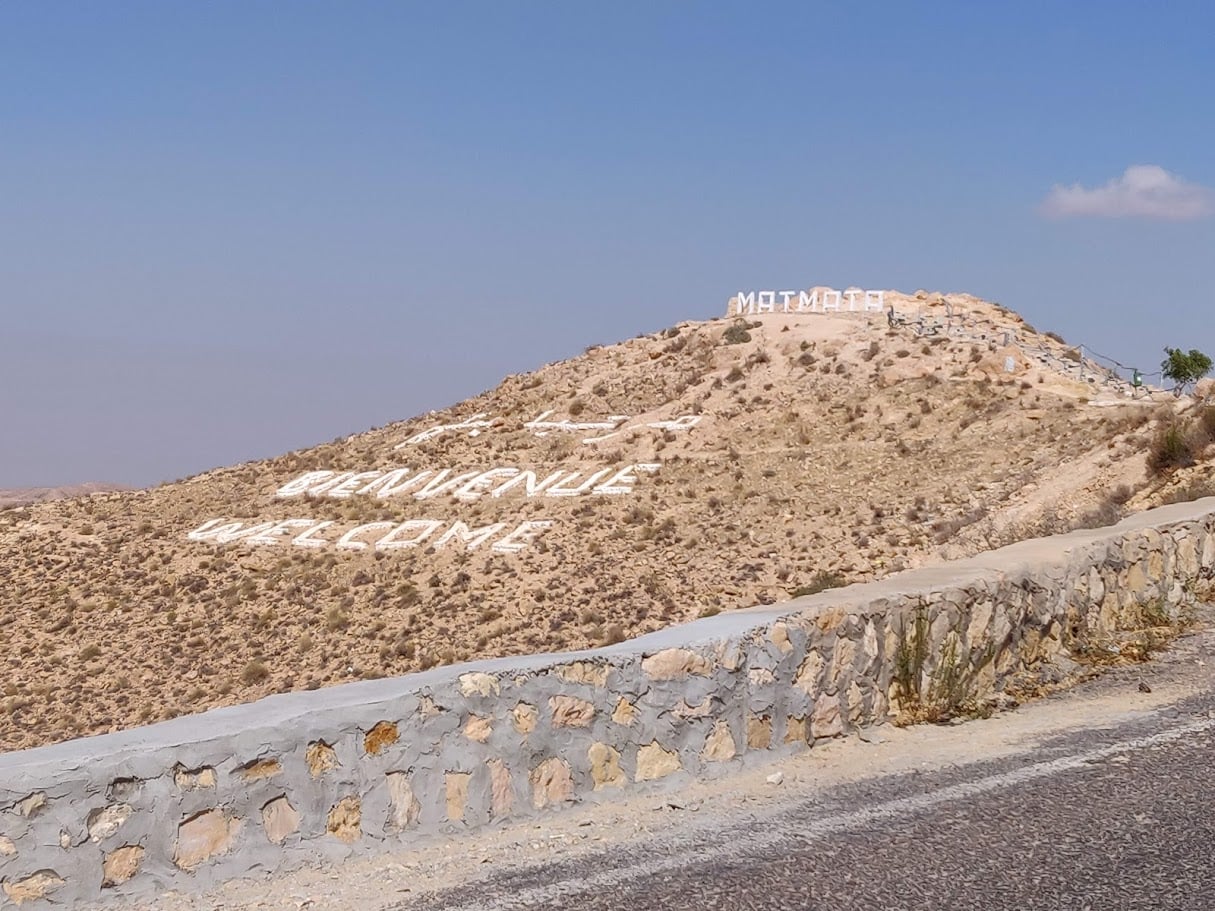
135 km from Djerba via the Ajim ferry or the Roman causeway, Matmata is famous for its underground dwellings carved into soft rock: a circular central pit serves as a courtyard, around which rooms, kitchen and storerooms open. This architecture keeps a remarkable natural coolness in summer — a lesson in bioclimatic design that is centuries old.
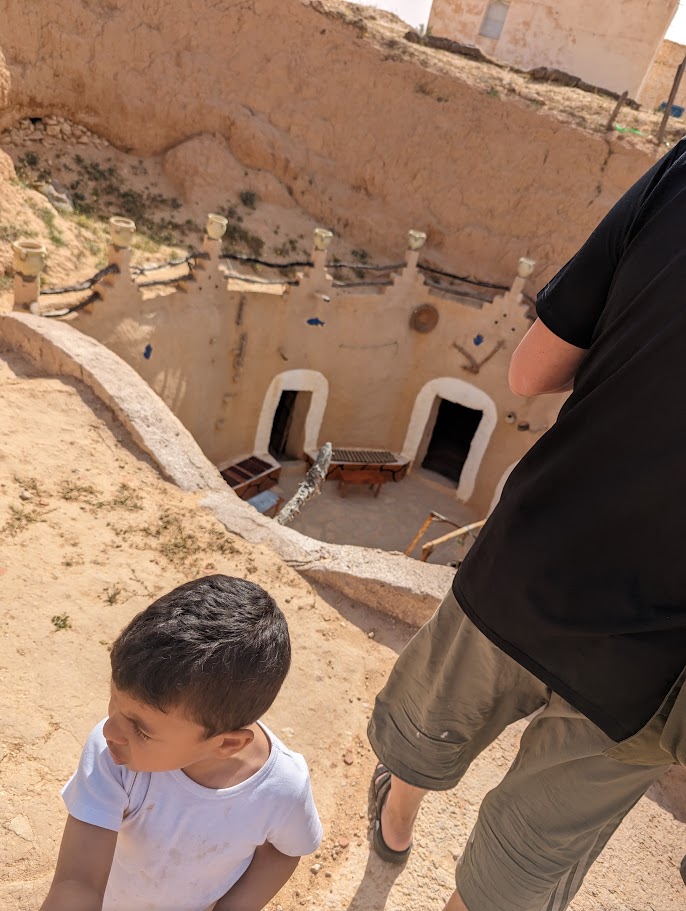
Several homes are still inhabited and welcome visitors with genuine hospitality. Another cinema anecdote: the Sidi Driss hotel served as the set for the Lars homestead, Luke Skywalker’s childhood home in Star Wars IV. Here too, the real interest goes far beyond the pop-culture wink: Berber ingenuity speaks for itself.
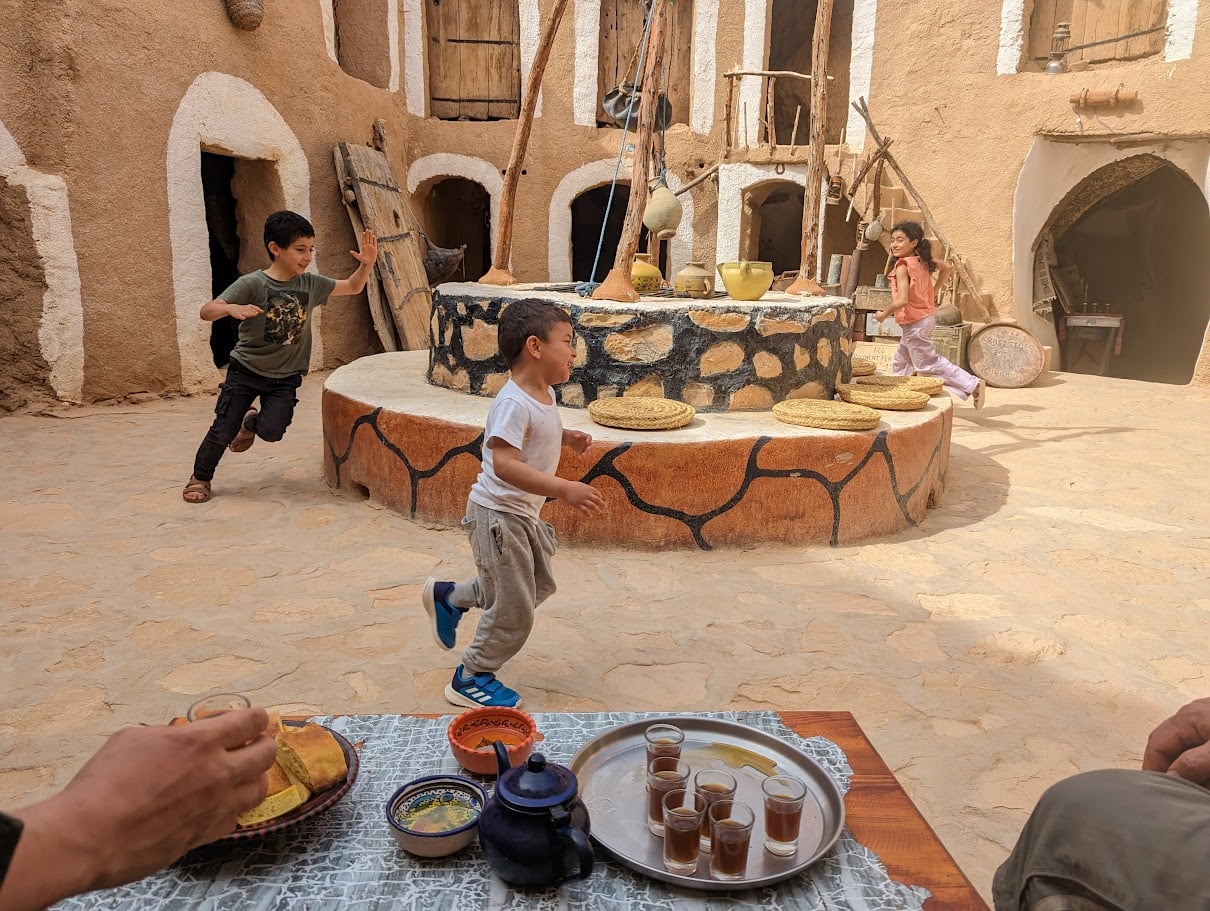
Douz and the Sahara: the real gateway to the desert
About 180 km from Djerba, Douz is known as the “gateway to the Sahara”. A stopover town on the way to the Grand Erg Oriental, it still lives to the rhythm of caravans and its weekly market.
Excursions from Douz typically include:
- A camel ride at sunset on the first dunes.
- Mint tea under a Bedouin tent, with flatbread baked in the sand.
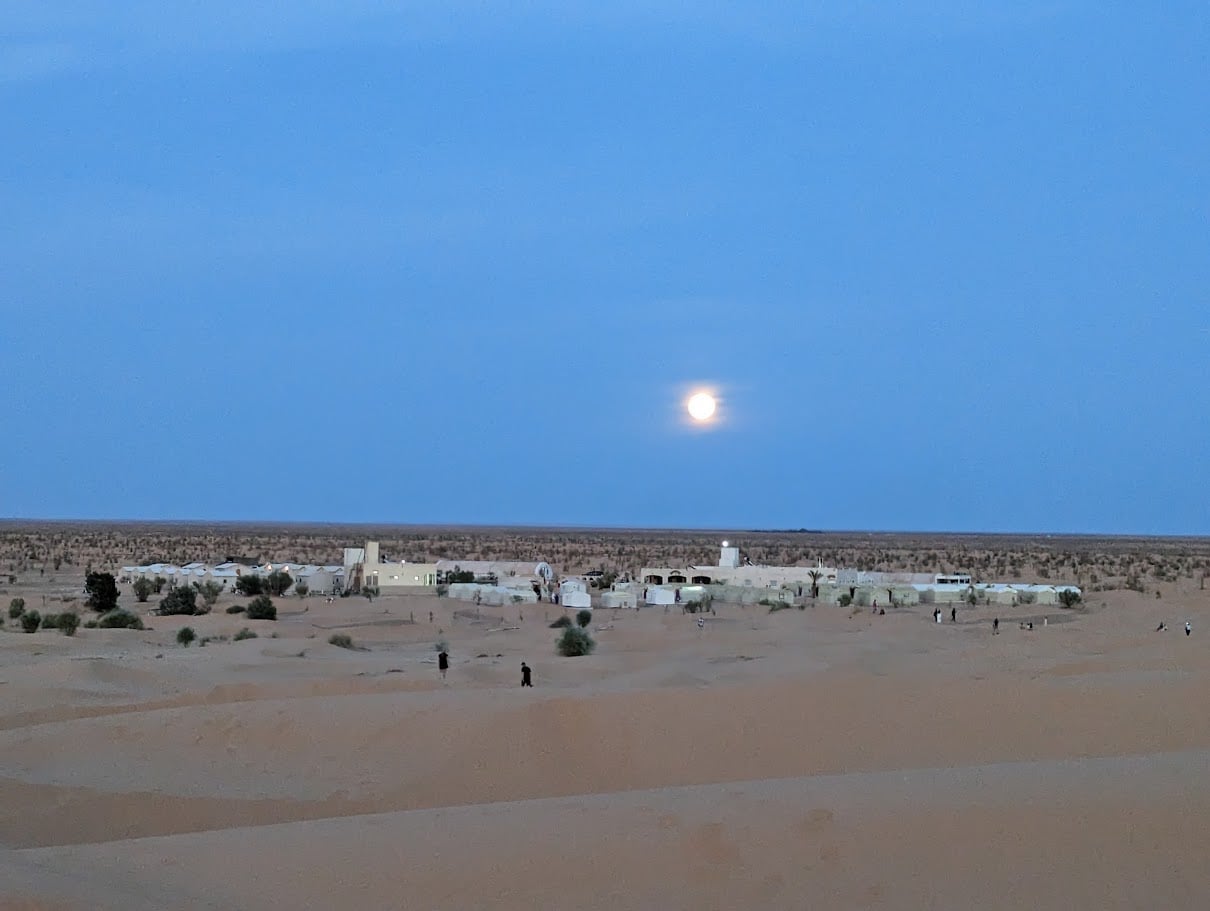
- For those who wish, an overnight bivouac under the stars — an experience children never forget.
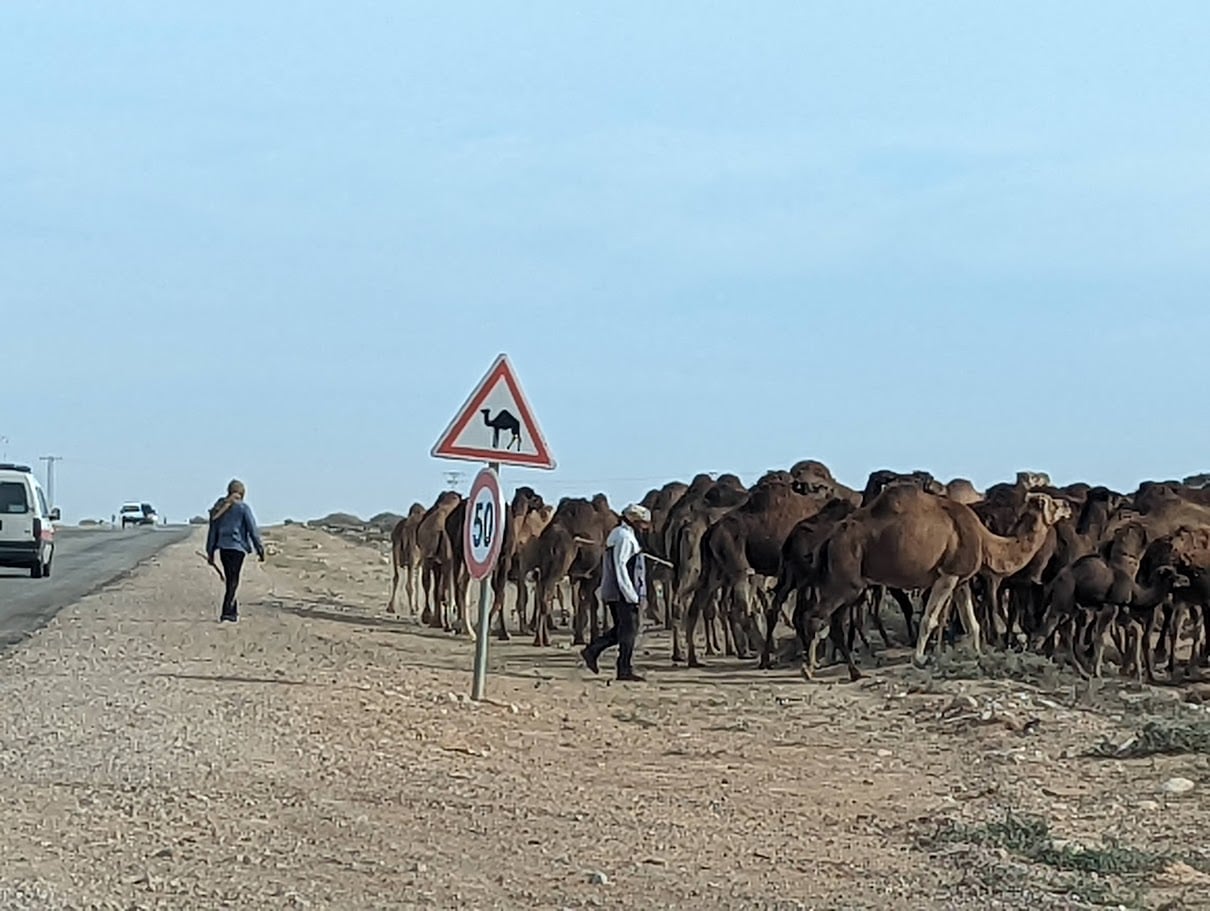
The evening in the desert is the most striking moment: the silence, the sudden drop in temperature, and a starry sky you see nowhere else. Pack a light scarf against the sand and a warm layer — Saharan nights can be cool even in summer.
Ksar Ghilane: the oasis for two-day trips
If you have two days, push on to Ksar Ghilane, a true oasis at the edge of the Grand Erg Oriental. You will find:
- A natural hot spring, surrounded by palm trees, where the whole family can cool off.
- Real, fine-sand dunes, reachable on foot or by 4×4.
- The Roman fort of Tisavar, a vestige of the Empire’s frontier.
On the way, the Chott el Jérid — an immense salt lake of more than 5,000 km² — offers a lunar landscape of white and pink, especially at sunrise. A photo stop is mandatory.
How to organise a day trip from Djerba
Three classic options, depending on how independent you want to be:
- Local agency in a minibus — the most common option (1 or 2 days, shared group, around 80 to 150 dinars per person depending on the destination). Simple and all-inclusive.
- Private driver in a 4×4 or sedan — more comfortable for a family or small group, flexible pace, free photo stops. Ethic Village Djerba can point you to a trusted driver on request.
- Rental car — a good choice for Matmata and Tataouine (paved roads). Not recommended for Ksar Ghilane or the deep desert, where only a guided 4×4 is suitable.
Whatever you choose, leave early (6:30–7am) to enjoy the morning light and be back before dark.
Practical tips for Southern Tunisia
- Heat: summer temperatures easily reach 40°C and above. Avoid excursions in peak August if you can, or leave really early.
- Water: plan for at least 1.5 L per person per day, more when walking through the ksour.
- Dress code: Southern Tunisia is more traditional than Djerba. Out of respect for locals, favour modest clothing — shoulders and knees covered, especially for women. It is also more comfortable in the sun and sand.
- Sunscreen, sunglasses, hat: essential — the glare off the sand is strong.
- Closed shoes for the ksour (rocky ground, narrow stairs).
- Ramadan hours if travelling during the month: some daytime restaurants close, plan accordingly.
- Health: adequate medical coverage is advisable before any trip; pharmacies are well present in stopover towns.
Back to Ethic Village Djerba: rest the body after the desert
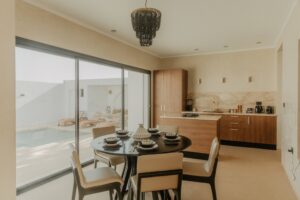
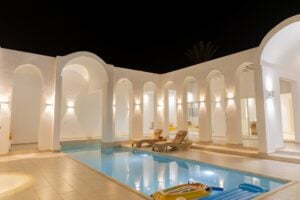
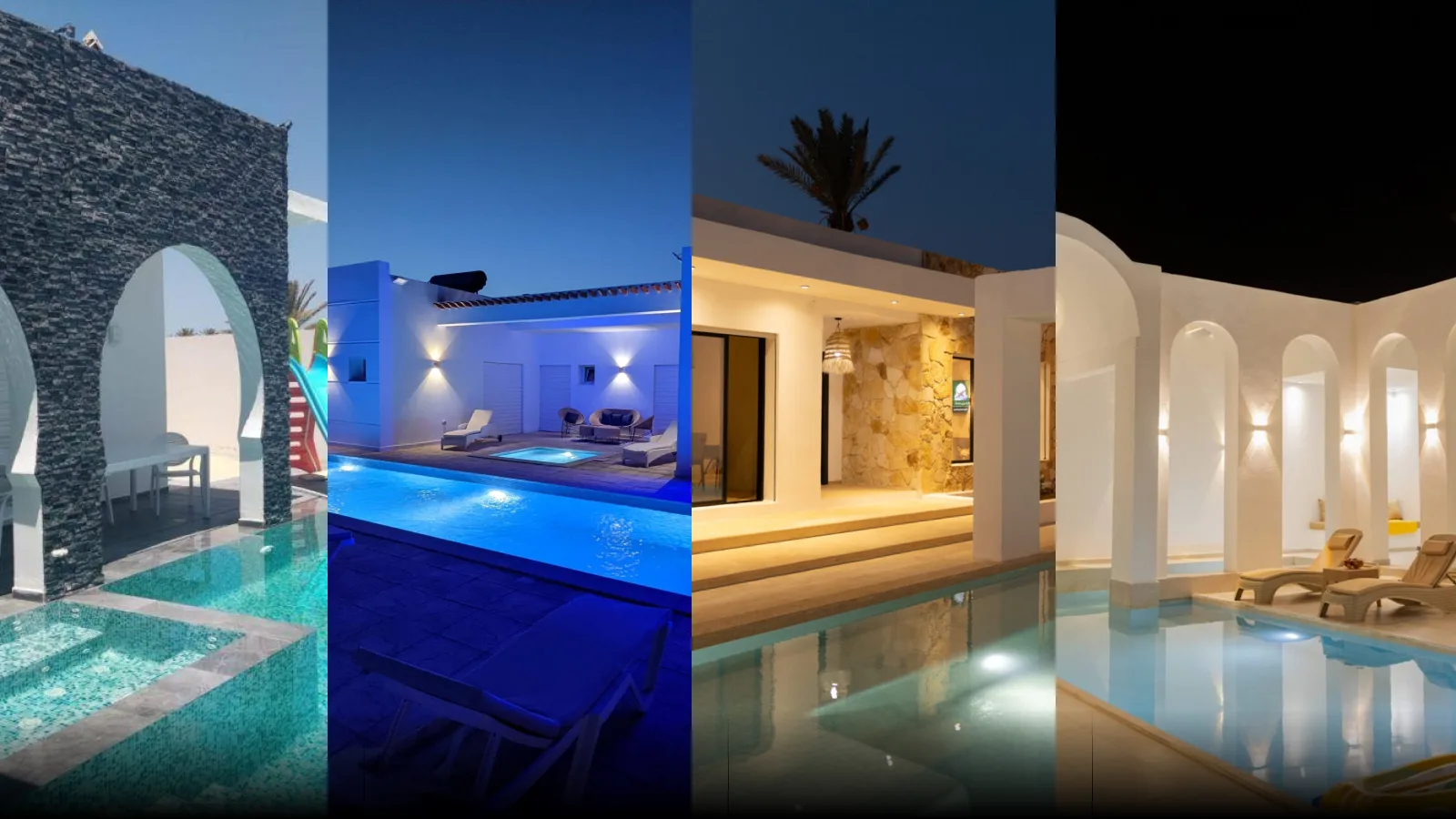
After a day in the ksour or a night of bivouac, coming back to your private villa is a real gift: a pool with no overlooking neighbours, a prayer mat and qibla indicator in every bedroom, a halal breakfast on the terrace, and a strictly alcohol-free setting for the whole family.
That balance — the adventure of the South paired with the serenity of the return — is what travellers often tell us makes a halal-friendly stay in Djerba truly memorable.
To keep exploring the island after your excursion, have a look at our Sidi Yati beach guide, our piece on traditional Djerbian cuisine, our walk through Djerbahood street art, and our family holiday guide to Djerba.