

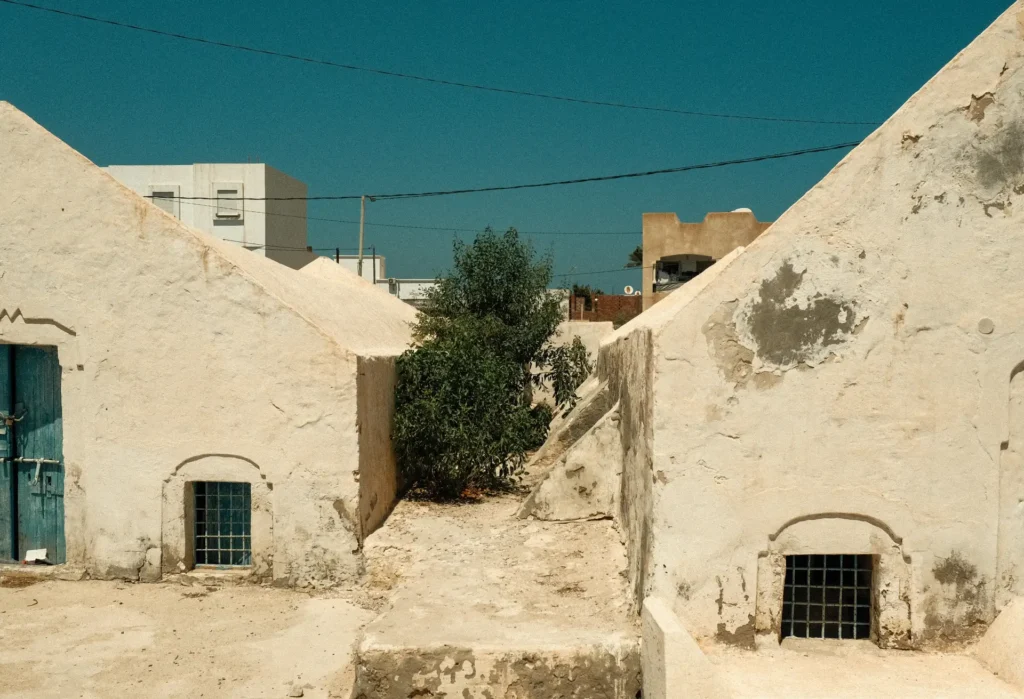
Looking for things to do in Djerba when you have a few days, perhaps children in tow, and want to see more than the beach? This guide brings together what we recommend to our own guests, sorted by what you feel like doing: beaches, souks, the flamingo lagoon, family outings, local food and day trips to the desert. Djerba is also an island where Berber, Arab, Jewish and Mediterranean cultures have met for centuries. Listed as a UNESCO World Heritage Site in 2023, it has far more to offer than its shoreline. To make the most of it, stay in one of the private villas at Ethic Village Djerba, in the Tezdaine neighbourhood (The Palms in Berber) of Midoun, at the heart of the island and an easy base for exploring. See also Djerba’s UNESCO World Heritage inscription.
Beaches and Swimming
Djerba’s coastline is a mix of very different beaches: some calm and almost empty, others livelier, and others with shallow water that is ideal for children.
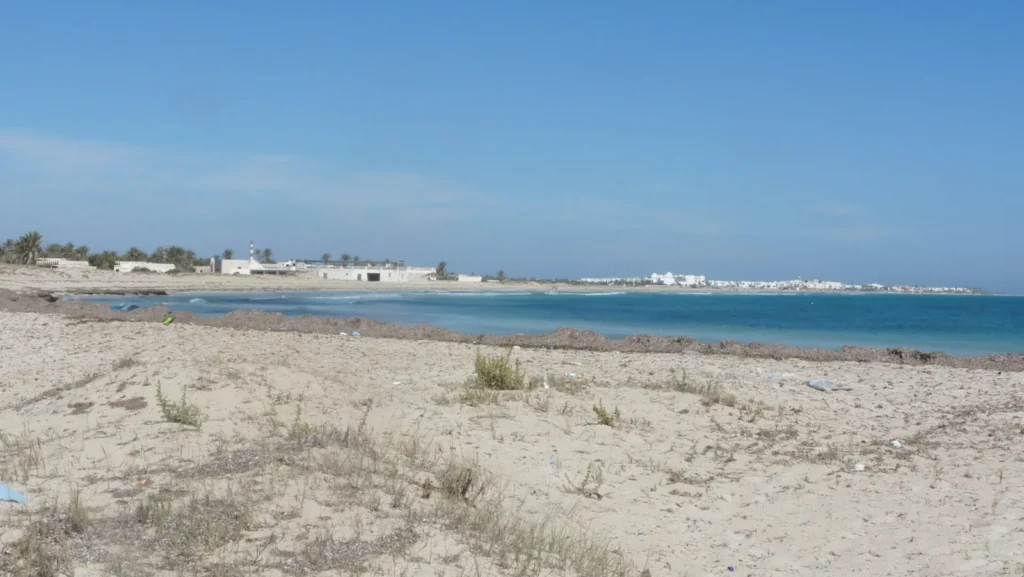
Sidi Yati — the Villa Beach
about 5 min by car from the Ethic Village Djerba villas, Sidi Yati beach is your go-to beach for the season. Wild, quiet and lined with tamarisk trees, it has clear, calm water, perfect for families with children. This is where you will lay out your towel every day. Find out more in our guide to Sidi Yati beach.
La Seguia
Known for shallow water that stretches out for several hundred metres, La Seguia beach suits toddlers very well. The sandy bottom and lack of waves make it a much-loved swimming spot for a stress-free family day out.
“La Plage” — the Hotel Seafront
The stretch locally known as “La Plage”, in the Sidi Mahrez hotel zone, is a busy seafront with parasol hire, water sports and a few cafés. More people, and a livelier feel that makes a change from the calm of the villa.
Sidi Mahrez — the Great Bay
Not to be confused with that hotel seafront, the great bay of Sidi Mahrez, in the north-east of the island, has a very different character. Translucent water and fine sand: people come here for long walks at sunrise or sunset, away from the bustle.
Culture and Heritage
Djerba has a rich history. Within a few hours you can go from an Ottoman fortress to one of the oldest synagogues in the world, and from a potters’ village to an Ibadi mosque.
Houmt Souk — the Central Market
Life in Djerba centres on Houmt Souk. The medina is a web of shaded alleys where spices, ceramics, embroidery, Berber jewellery and Guellala pottery change hands. The market is at its liveliest in the morning. Take time to wander the covered souks, haggle over a djellaba or bring home some of the blue-and-white ceramics the island is known for. Close by, Borj El Kebir, a 16th-century Ottoman fortress, looks out over the fishing port.
The El Ghriba Synagogue
One of the oldest synagogues in the world, El Ghriba in Erriadh is a place of pilgrimage and quiet reflection. Its blue tile mosaics and painted columns are worth the visit, whatever your background. The village of Erriadh has itself become an open-air museum thanks to the Djerbahood street art project, for which artists from around the world painted the walls of the medina.
The Guellala Museum
High above the potters’ village of Guellala, this ethnographic museum recreates traditional Djerbian life in life-size scenes: weddings, crafts, farming, Berber costume. Visitors in a hurry often skip it, yet it is a good way to understand how people lived on the island in the past.
The Fadhloun Mosque
On the outskirts of Midoun, the Fadhloun Mosque is one of the most beautiful on the island, with the hallmarks of Ibadi architecture: clean white volumes, no superfluous decoration, a squat minaret. Even from the outside, it shows what makes Djerba’s architecture distinctive, which is why UNESCO added the island to its World Heritage list. Djerba’s mosques are not just monuments: they are part of daily life, places people visit five times a day. From the villas, the Troujette mosque is a few minutes’ walk away — locals stroll there the way you would pop out for bread.
Nature Activities
Away from the beaches, Djerba keeps corners of nature that many visitors never see: lagoons, sandy islets, olive groves.
The Pink Flamingo Lagoon
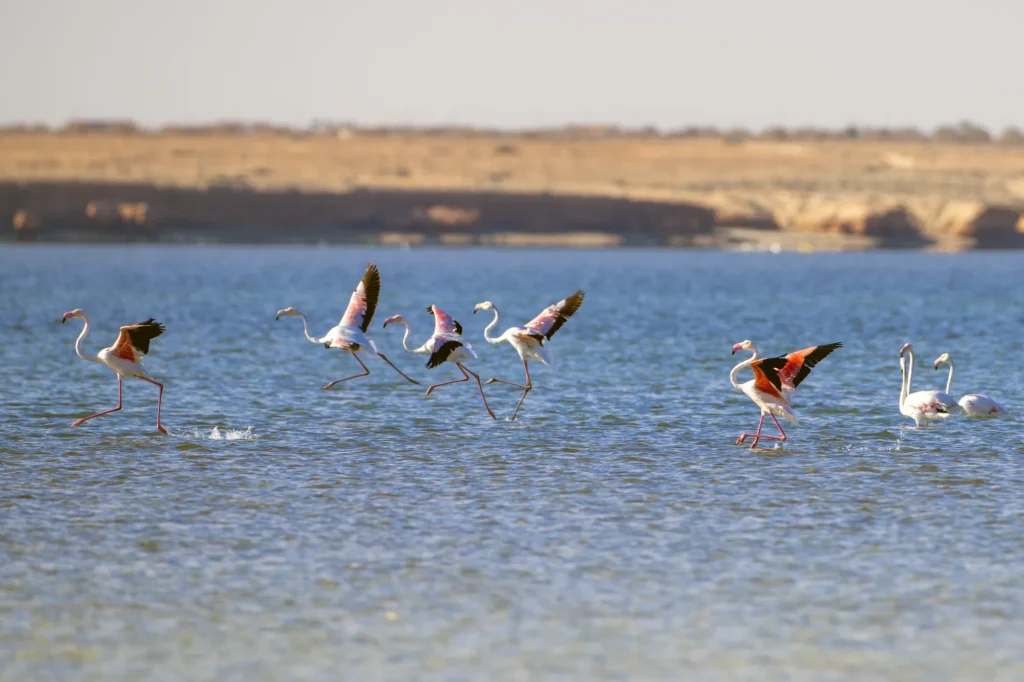
In the north-west of the island, the lagoons and sebkhas (salt flats) host hundreds of pink flamingos every autumn and winter. An early-morning walk with binoculars, in complete quiet, lets you watch them in their natural habitat. Children remember it for a long time.
Ras R’mel Islet
Ras R’mel, known as Flamingo Island, is reached by boat from the port of Houmt Souk: a wild strip of sand, an end-of-the-world landscape between dunes and open sea, perfect for an impromptu picnic and a swim far from everything. With a little luck you may even spot dolphins: I have often seen them at Ajim, on the battah (the Ajim – Jorf ferry), and around Ras R’mel.
Camel Rides
Camel rides remain a family favourite, particularly around Sidi Mahrez or on outings to the northern beaches. Several operators offer one-hour rides along the shore at sunset: often the photo you keep from the trip.
Horseback Riding
For a more active way to explore Djerba’s countryside, horseback riding takes you through rural areas, centuries-old olive groves and the quiet northern beaches at a different pace. Local riding clubs offer guided rides for all levels, including beginners.
Sports and Adventure
If you need to keep moving between swims, the island has plenty of options.
Quad Biking and Buggies in the Dunes
On the edge of Midoun, several operators run quad and buggy tours through the island’s interior: olive groves, Berber villages, sandy tracks. One to two hours off-road, for an adventure with family or friends. Open to children over 10 accompanied by an adult.
Kitesurfing and Windsurfing
Sidi Mahrez Bay and Djerba’s north coast are known for steady winds, especially from March to June and in September. Kitesurfing is particularly popular, with several accredited schools offering beginner lessons, intensive courses and equipment hire. Experienced riders often find good conditions early in the morning.
Jet Skiing and Water Sports
Around La Plage and Sidi Mahrez, water sports centres offer jet skis, towed inflatables, paddleboarding and sea kayaking. A way to see the island from the water and add a bit of pace to a beach day. Go in the morning, before the afternoon swell picks up.
Golf
The Djerba Golf Club in Midoun is a fine 27-hole course lined with palm trees and olive groves. Open all year round, it welcomes experienced players and beginners keen to take lessons alike. A well-kept setting for a sporty morning before heading back to your private pool that is not overlooked, if you are staying in our family villas with a pool in Djerba.
Sporty guests tend to choose villa Saphir: a 12 lap pool, not overlooked, and a basketball court in the garden.
Family Activities
With children, Djerba is easy going: there is no shortage of outings suited to little ones.
Djerba Explore
Djerba Explore is the island’s big cultural and leisure park, bringing together the Djerba heritage museum, a crocodile park (several hundred Nile crocodiles), a reconstructed craft village and cultural shows. Allow at least half a day to see it all. Children learn as much as they have fun.
Water Parks
In high season, the water parks in the Sidi Mahrez hotel zone are popular with families. Giant slides, lazy rivers, landscaped beaches and on-site food leave children with happy memories. Book online to skip the queues.
Mini-Golf and Leisure
Several mini-golf courses can be found in Houmt Souk and Midoun, perfect for a relaxed family evening. And for days when you would rather stay “at home”, the Ethic Village Djerba villas have table tennis, badminton and a children’s play area — enough to keep the youngest busy without leaving the garden. See the full list of facilities on each villa’s page: Villa Diamant, Villa Saphir, Villa Opale and Villa Jade.
Food and Drink
Djerbian cooking blends Berber, Arab and Jewish traditions. Here is where to try it.
Local Restaurants to Try
In Houmt Souk, the fishing port is lined with fish and seafood restaurants: lobster, grilled octopus, sea bass and red mullet share the menu with egg briks and chorba (soup). In the covered market, small eateries serve dishes of the day at low prices, popular with the island’s fishermen and craftsmen.
Street Food and Specialities
Don’t leave Djerba without trying a brik (crisp fried pastry with tuna, capers and a runny egg), a fricassé (fried Tunisian sandwich filled with harissa, tuna and olives), makroudh (semolina cakes filled with dates) and, of course, charcoal-grilled fish from the seaside stalls. The Friday market in Midoun is also a chance to discover local produce: olives, olive oil, spices and goat’s cheese.
Meal Delivery Service — Ethic Village Djerba
In a private villa, you can eat in without giving up a good meal. Ethic Village Djerba offers a meal delivery service, with dishes prepared by local cooks and brought straight to your villa — tagines, couscous, kebabs, mezze and homemade desserts. A real Tunisian family meal, without the journey (at extra cost).
Evenings
After sunset, Djerba lends itself above all to quiet evenings with the family.
Tea Rooms and Seaside Cafés
The Sidi Mahrez coast and the Houmt Souk seafront are home to most of the island’s tea rooms and beach cafés. Mint tea, fresh juice, background music and sea views — several places offer a pleasant atmosphere until midnight, especially in May–June or September when the nights are mild.
Cultural Evenings
Some guesthouses and cultural venues host traditional music evenings (malouf, Arab-Andalusian music) or shows open to non-residents. A different way to immerse yourself in Djerbian culture for an evening.
Stargazing from Your Private Pool
Far from any major light pollution, Djerba’s sky is often full of stars. One of the simplest pleasures of your stay is ending the evening stretched out by your pool, a glass of lemonade in hand, gazing at the Milky Way. A moment of silence that invites gratitude. Free, and on offer every evening from all our villas.
Day Trips
Djerba is a good base for discovering southern Tunisia, with its desert, ksour and oases.
Ksar Ghilane — the Saharan Oasis
Ksar Ghilane is a natural oasis in the middle of the Sahara, 4 to 5 hours by road from Djerba (the last stretch by 4×4). Expect golden dunes as far as the eye can see, hot springs in the middle of the desert, camel rides at sunset and nights in a tent or lodge. Shared day trips from the island start at €80 per person on the local market (prices seen at local agencies, not an EVD service). Worth considering if you have at least one free day.
Matmata and the Troglodyte Houses
2 hours 30 minutes from Djerba, the village of Matmata is known for its troglodyte homes dug into the rock — and for standing in for the planet Tatooine in Star Wars. Visiting a traditional house, dug out on several levels around a central courtyard, is worth the trip on its own. Combine it with the ksour (fortified Berber granaries) of Medenine or Ksar Ouled Soltane.
Tozeur and the Jerid Oases
More ambitious (around 5 hours 30 minutes by road), the trip to Tozeur and the Chott El Jerid salt lake is worth it for the lunar landscapes, palm groves and mud-brick architecture. In season (November to March), the Chott offers mirages and pastel reflections. A long day that photographers and lovers of wide open spaces particularly enjoy.
Sleeping capacity, pools, prices and distances: you’ll find it all on one reference page, All our villas in the residence.
Things to Do in Djerba: Your Practical Questions
What is the best time to visit Djerba?
The best time to visit Djerba is May–June and September–October. It is sunny, the sea is warm (26-28°C in September), the beaches are quieter and prices are lower than in July–August. July and August remain the family high season, with stronger heat (often above 30°C, with peaks of 35-40°C) but a very lively atmosphere. Even in November–December, the island is pleasant for culture and day trips, with mild temperatures. Wondering what to do in Djerba in December? Cultural visits, day trips and the lagoon where the flamingos spend the winter are particularly well suited to it.
Is Djerba suitable for families with children?
Yes. Djerba is very well suited to family holidays. The shallow water at Seguia and Sidi Yati is ideal for little ones, the activities (quad biking, Djerba Explore, water parks) appeal to children of all ages, and Tunisian food usually goes down well even with fussy eaters. The private villas at Ethic Village Djerba, with their secure pool that is not overlooked, play area and outdoor space, are designed to welcome families in comfort. See our FAQ for more answers.
How do you get around Djerba?
The most practical way to explore Djerba is to hire a car or scooter at the airport or in Houmt Souk. The island is small (less than 30 km long) and the roads are in good condition. Shared taxis (louages) link the island’s main towns at fixed fares. For trips further afield (Matmata, Ksar Ghilane), local agencies run guided minibus excursions. Ethic Village Djerba can point you to trusted providers through its concierge service — some services are at extra cost.
Do you need to speak Arabic to travel to Djerba?
No, not at all. French is very widely spoken in Djerba, particularly in shops, restaurants, hotels and tourist agencies. In tourist areas and Houmt Souk, many shopkeepers also speak English, German and Italian. A few words of Arabic (shukran = thank you, bislema = goodbye) are always appreciated and bring a smile.
Book Your Halal-Friendly Villa and Discover Djerba
After a day out, you need somewhere to come back to in the evening. The 4 private villas at Ethic Village Djerba — Diamant, Saphir, Opale and Jade — are in the Tezdaine neighbourhood (The Palms in Berber) of Midoun, in the centre of the island. A private pool that is not overlooked, a leafy garden, family equipment, a strictly alcohol-free residence (house rules, no exceptions), prayer mats and the Qibla direction marked in every villa. We welcome every family looking for the same privacy and peace of mind.
Some of the activities in this guide are booked through trusted partners and reserved for our guests, so your stay starts with choosing your villa.
See the villas and their availability → Insha’Allah, Djerba has wonderful discoveries in store for you.
Cover photo: weaving workshops in Houmt Souk, by Noland architect (CC BY-SA 4.0, via Wikimedia Commons).


