

If you are a Muslim traveller planning a trip to Djerba, you might wonder: where can I find halal food? The short answer — almost everywhere. Tunisia is a Muslim-majority country, and most of what you eat on this beautiful island is halal by default. See also Ibadism on Wikipedia.
In this guide, we walk you through the local food scene, markets, must-try dishes, and how staying at a Muslim-friendly villa with meals included makes your holiday even easier.
Culturally Halal: The Default on the Island
Unlike destinations in Europe or Southeast Asia where finding halal food can feel stressful, Djerba keeps things simple. Tunisia is overwhelmingly Muslim, butchers follow Islamic slaughtering practices, and pork is virtually absent from local life — you will not find it in neighbourhood restaurants, markets, or street food stalls.
A note on terminology: Tunisia has no nationwide halal certification scheme like some Gulf or Asian countries. The food environment is best described as culturally halal — Islamic slaughtering is the standard, pork is excluded from mainstream supply. Where to stay alert: some tourist-oriented restaurants and international hotels do serve alcohol and may use wine or spirits in cooking (sauces, desserts). The exception, not the rule — but worth noting honestly.
Practical rule: eat at local and family-run restaurants, shop at neighbourhood butchers and supermarkets, and at tourist-facing venues, simply ask if a sauce or dessert contains alcohol. A polite question is always welcome.
Must-Try Local Dishes
Djerbian cuisine is a feast for the senses. Here are the dishes your family should not miss:
- Couscous au poisson: The island’s signature — semolina topped with a rich, spicy fish stew, typically grouper or sea bass. Traditionally served on Fridays after Jumuah.
- Brik: Crispy deep-fried pastry filled with egg, tuna, capers, parsley. Eaten by hand. Children love it.
- Ojja: Spicy tomato and pepper stew with eggs (often merguez). Hearty and flavourful.
- Lablabi: Warming chickpea soup with cumin, garlic, harissa, served over torn bread. A winter breakfast staple.
- Grilled octopus and fresh fish: Seafood is abundant and remarkably fresh. Beachside grilled fish is a must.
- Makroudh: Date-filled semolina pastry, fried and soaked in honey.
Want to go deeper into the flavours and seasonal rhythms? Our guide to traditional Djerbian cuisine covers each dish in detail.
Where to Shop: Markets and Supermarkets
For families staying in a self-catering villa, Djerba’s markets are a delight — and fresh meat from any neighbourhood butcher, supermarket counter, or market stall is halal by default.
- Houmt Souk Central Market: Fresh fish, meat, vegetables, spices, and olives. Open daily except Friday afternoon. Arrive early.
- Midoun Market: A large open-air market every Friday — food, clothing, pottery, household goods.
- Supermarkets (Carrefour, Monoprix, Magasin General): Packaged goods, dairy, fresh produce. Meat counters stock standard halal cuts; imported goods are clearly labelled.
- Small neighbourhood grocers (épiceries): On almost every corner — bread, eggs, dairy, and friendly conversation.
Prices are very affordable. A kilogram of fresh fish costs around 15-25 TND (approximately 4-7 GBP), and a full bag of fruits and vegetables rarely exceeds 10 TND.
Recommended Restaurants
A few family-friendly options across budgets:
- Restaurant Haroun (Houmt Souk): Fresh seafood and traditional Tunisian dishes. Generous portions.
- Dar Hassine (Midoun): Refined Djerbian cuisine in a restored traditional house.
- Beach restaurants along Sidi Mehrez and Aghir: Grilled fish with a sea view — relaxed lunches with the children.
A practical habit: in neighbourhood restaurants, halal is the default. In larger tourist venues, a quick question about alcohol in the sauce or dessert is perfectly normal — staff are used to it.
Half-Board and Full-Board at Ethic Village Djerba
If you would rather not think about restaurants at all, our Muslim-friendly villas offer optional half-board and full-board meal plans (in supplement). Our cook prepares fresh, home-style Tunisian dishes daily — all halal, and with absolutely no alcohol used in any preparation. Our residence is strictly alcohol-free as a matter of house rules.
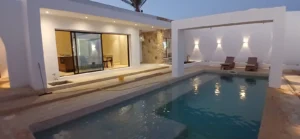
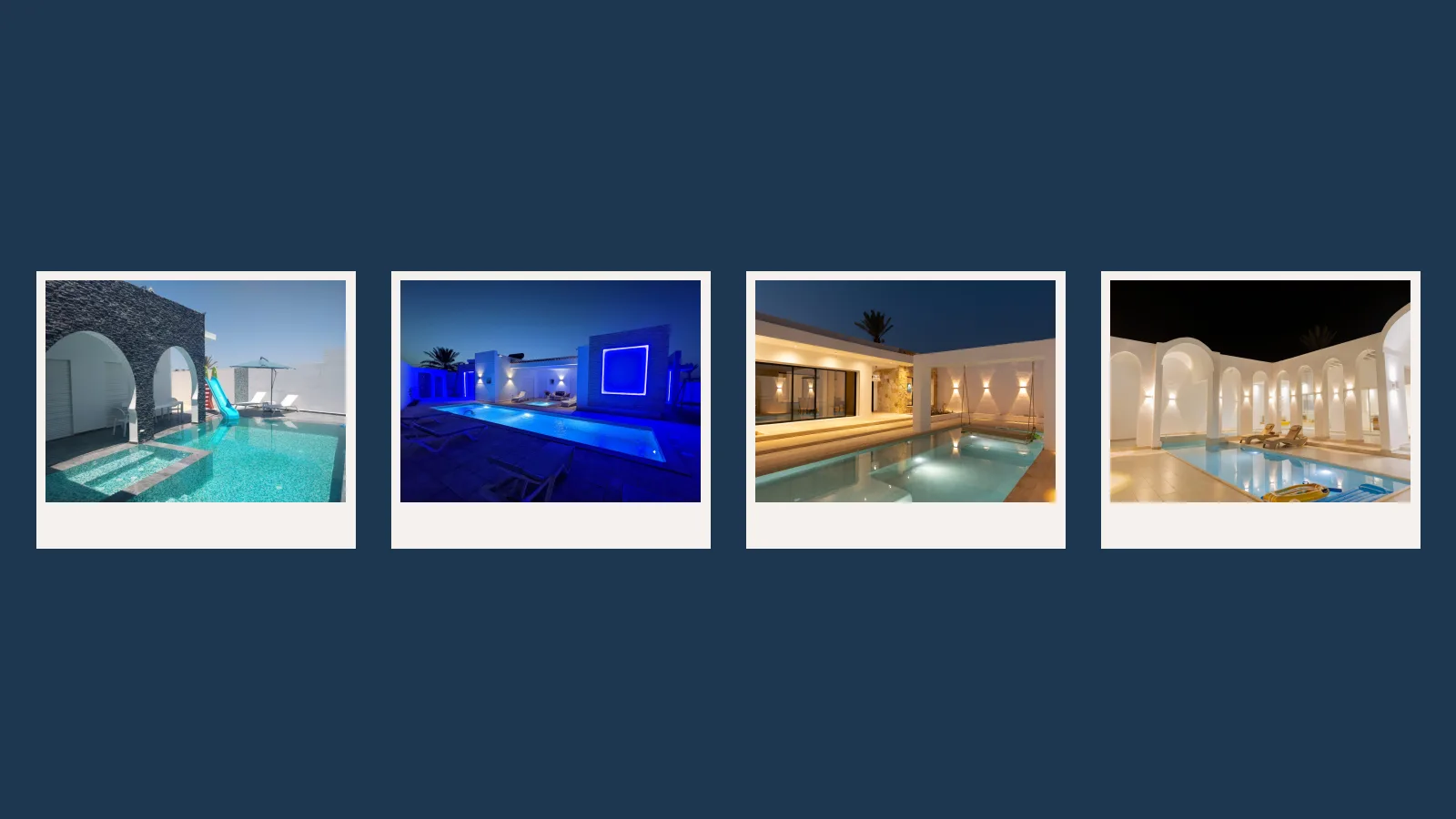
This home-kitchen setting is the strongest answer to the halal question: every ingredient, stock, and sauce is under your control. Families staying at Villa Opale or Villa Jade enjoy this in complete privacy, around a private pool with no overlooking neighbours.
Each villa also comes with a prayer mat and a clearly indicated qibla direction, so daily prayers stay effortless. See our family holidays page and practical guide for family holidays in Djerba for more, and our halal villa with private pool, alcohol-free page for the full picture. Our Villa Saphir even features a 12-metre swimming lane.
Frequently Asked Questions
Do I need to look for halal certification in Djerba restaurants?
Tunisia does not operate a nationwide halal certification label. In practice, the food environment is culturally halal: Islamic slaughtering is the standard and pork is almost entirely absent. At tourist venues that serve alcohol, it is reasonable to ask whether a specific sauce or dessert is made with wine or spirits.
Is there alcohol in Djerba restaurants?
Some tourist-oriented restaurants and larger hotels do serve alcohol; most local, family-run restaurants do not. Djerba as an island is not alcohol-free. At Ethic Village Djerba, our residence is strictly alcohol-free by house rules, and our meal service never uses alcohol.
Can I buy halal baby food and formula in Djerba?
Yes. Pharmacies and supermarkets stock well-known baby food brands. Infant formula (Gallia, Guigoz, and similar) is available, though we recommend bringing your preferred brand for the first few days.
Are prayer facilities easy to find?
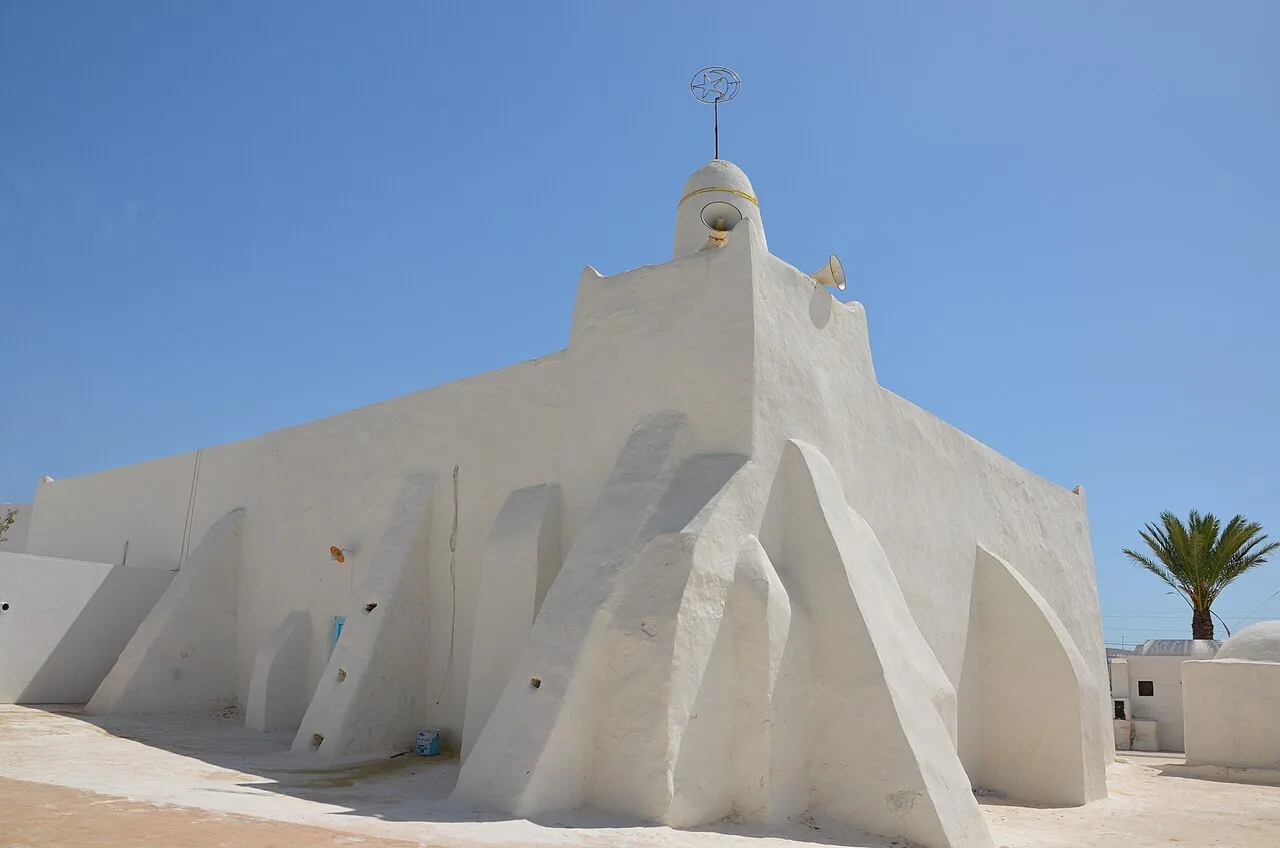
Mosques are everywhere. Our residence is a 5-minute walk from Troujette Mosque and a 10-minute walk from Khalid Ibn Al Walid Mosque. Each villa includes a prayer mat and clearly marked qibla direction. For official figures, see Djerba inscribed by UNESCO in 2023.
A Muslim-Friendly Holiday, From the First Meal to the Last
Djerba remains one of the easiest destinations for Muslim families to eat well without constant worry. Neighbourhood restaurants, markets, and street food are culturally halal by default; the one thing to watch for is alcohol in tourist-facing venues — easy to sidestep with a question, or to avoid entirely by eating at home.
That is exactly what our Muslim-friendly villa with a private pool, no overlooking neighbours, prayer mat and qibla in every villa, and a strictly alcohol-free residence is built for — a setting where your faith, your family, and your meals feel completely at home.
Book your Muslim-friendly villa with optional meal plans and experience Djerbian cuisine from the comfort of your private villa.