October is the month Djerba stops performing. The charter crowds thin out, the beach operators put the pedalos away, and the island goes back to running for the people who live on it. If you are eyeing a week away — the late-October half-term, or any week you can carve out of the autumn term — the question is a fair one: is Djerba in October worth the flight?
Our answer is yes. But the late season is not summer, and it is far easier to enjoy when nobody arrives expecting summer.
October is off-season in Djerba, and that is the point
Djerba’s tourist year is built around the warm months. By October the island is still warm and no longer full — the two things rarely overlap, and October is where they do.
What that buys a family is ordinary and worth a lot: restaurants with tables free, souks you can walk through with a pushchair, beaches wide enough to lose a ball on, and rates that sit well below the July figure. What it costs you is a shorter day, a cooler sea and a few resort services already winding down. The rest of this article is that trade, in detail.
Djerba in October: late season, already turning
The heat has broken, and that is the main gain
The flattening heat of summer is gone. Days run around 28 °C and nights fall back to the low twenties, against 31 to 32 °C by day and 23 °C at night in September. With children that changes two things: you can go out in the middle of the day without building the whole trip around a nap, and everyone sleeps better.
It is also the month walking becomes a pleasure again — the lanes of Houmt Souk, the potters’ workshops, the inland villages. Djerba carries a UNESCO World Heritage listing for its island settlement pattern, which makes a good thread to pull on with children in tow.
The sea is still warm, but it is cooling
This is the real difference with September. The Mediterranean averages about 26 °C off Djerba in October, against about 28 °C in September. Two degrees: enough to feel, not enough to keep anyone out. The slope carries on from there — November is already down to 22.5 °C — so it is the very last days of October that ask a little courage of the smallest swimmers.
If your dates are not fixed, the same questions come up a month earlier with a warmer sea, and we wrote that up separately: Djerba in September.
Your own pool follows the same curve. Unheated, it stays comfortable early in the month and turns chilly for young children by the end of it. Hence the pool heating we offer as a paid extra, for €20 a day, at the villa Diamant — the only one of the four fitted for it.
The days get shorter, and the clocks get involved
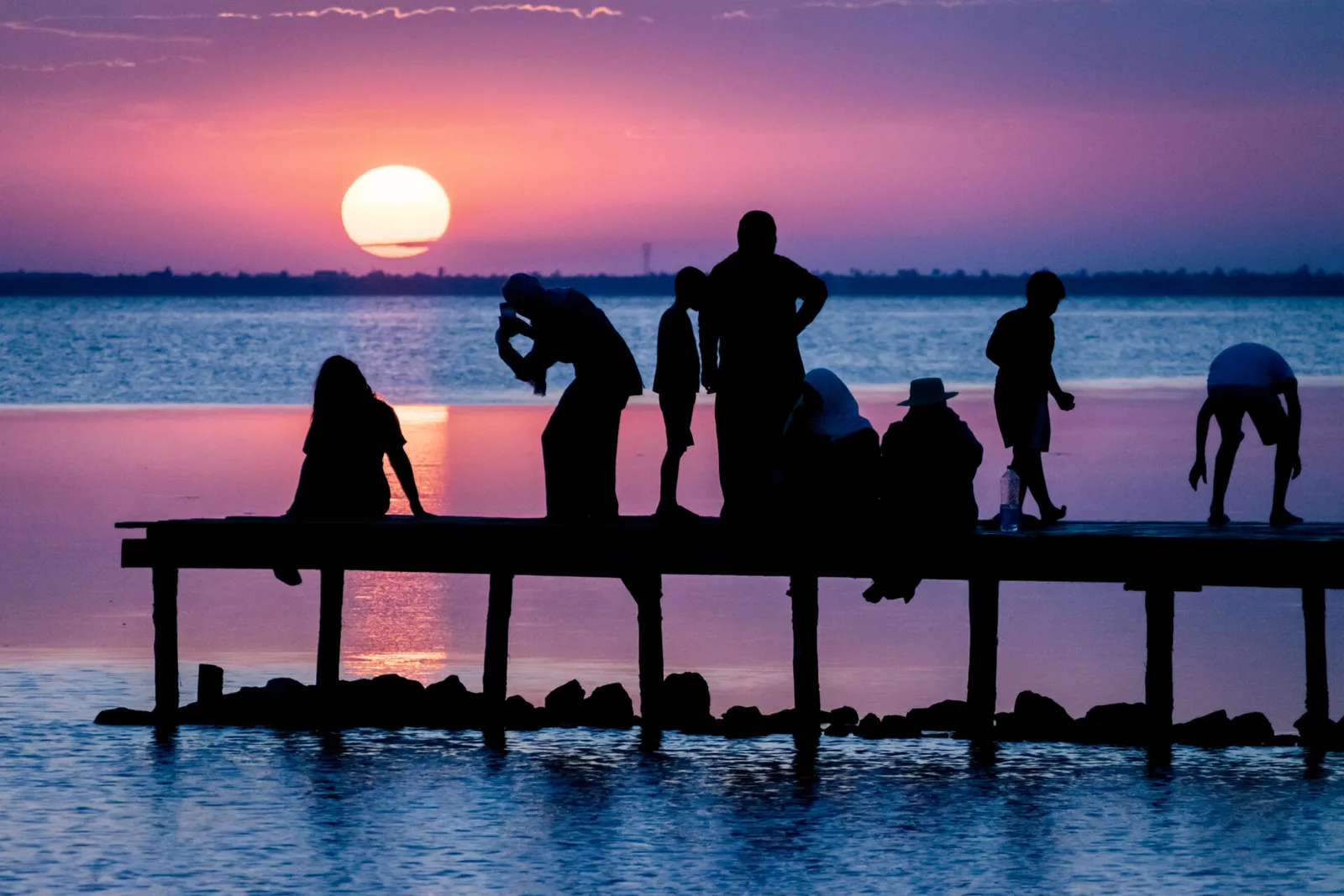
On Djerba the sun sets around 6pm on 1 October, about 5:45pm mid-month and 5:25pm on the 31st, against 7:30pm at the height of summer. Afternoons at the pool end earlier; evenings move onto the terrace.
Then the clocks go back. On Sunday 25 October 2026 the UK and Ireland return to standard time, while Tunisia stays on UTC+1 all year round. So before that Sunday, Djerba is on the same clock as home; after it, Djerba is an hour ahead. If your trip straddles the change, read your flight times twice — the outbound and the return may not be on the same footing.
Rain is a real possibility
October brings the first rain after the dry summer: four rainy days on average across the month, for roughly 35 mm, against two days and about 15 mm in September. The showers are short, but a two-week stay stands a fair chance of meeting one; the Djerba climate page on Climates to Travel gives the month-by-month detail, sea temperatures among them. A wet day in a hotel room is a long day. In a villa with a sitting room and a kitchen, it is just a day.
What stays open in October, and what starts to close
Running normally:
- The markets and souks of Houmt Souk and Midoun — they work all year for the island’s own residents, not for visitors.
- Local restaurants, grocers, bakeries and pharmacies.
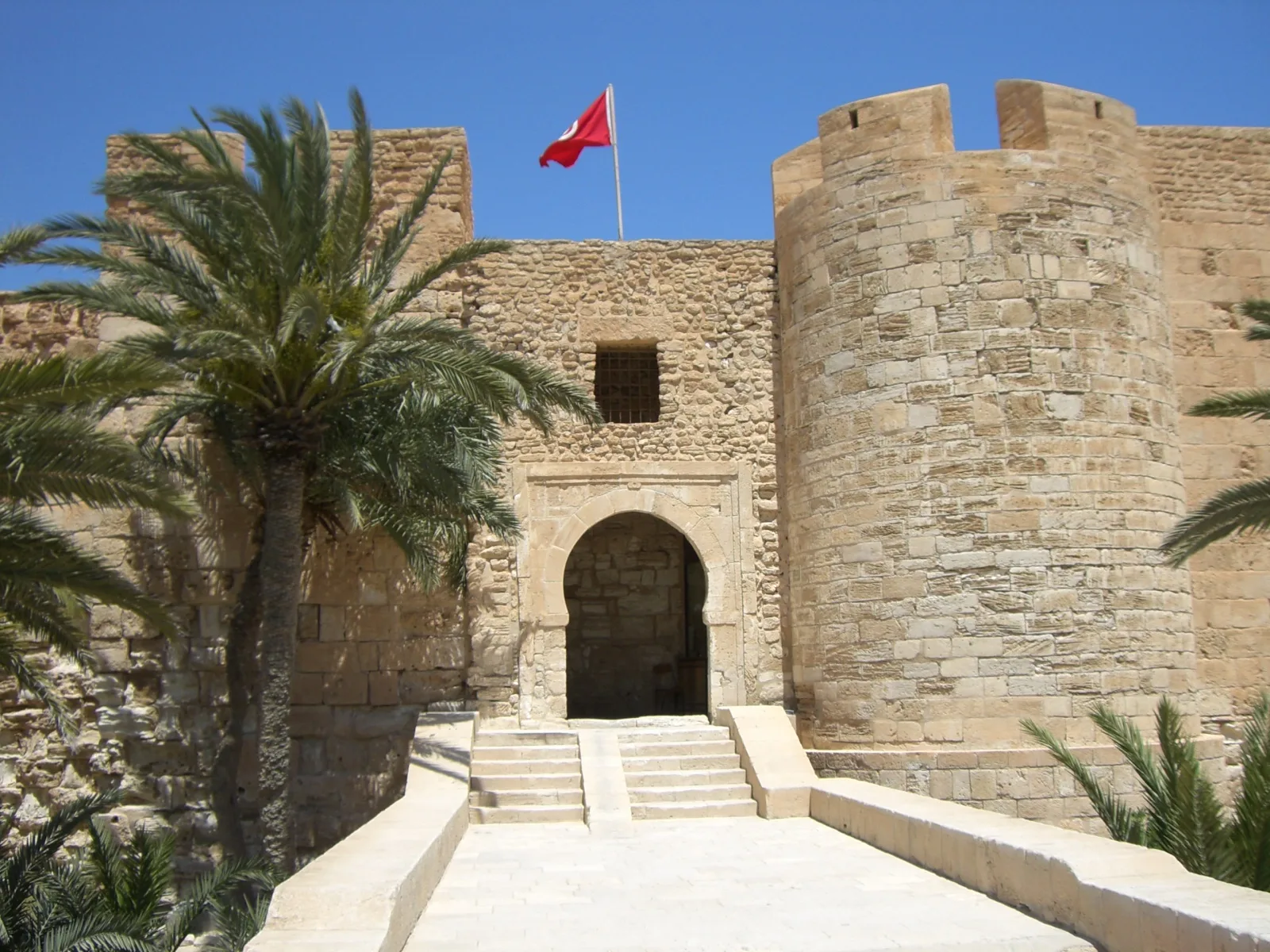
- The island’s heritage sites and museums.
- Taxis and car hire.
- The beaches, Sidi Yati among them, a 6-minute drive from Ethic Village Djerba.
- Organised excursions — they run as they do the rest of the year, in smaller groups than at the height of summer.
Thinning out or stopping:
- Some of the beach watersports close with the bathing season, on no common date — each operator picks its own.
- Seasonal properties in the hotel zone shut for winter, though that shutdown runs from November to April nationally, and Djerba is one of the areas most affected (around 20,000 beds across Tunisia). October falls just before it.
The island keeps turning and daily life is untouched, but the holiday-club animation goes quiet. For a family after some peace, that is the good news; for one counting on activities laid on at the door, it is worth knowing before booking. What there is to do on the island in any season, we gathered in our guide to a family holiday in Djerba.
Getting there in October
Here the UK is a fortunate exception, and it is worth understanding why. easyJet’s two British routes to Djerba were not built as summer routes: Luton opened on 5 November and Manchester on 11 November, in the 2024-2025 winter season. Deep winter is what they were launched for. So October is not the last window before the shutters come down — it is the threshold of a service that thickens after it, at exactly the moment the island itself empties out.
- London Luton (LTN) to Djerba–Zarzis (DJE), direct with easyJet, in around 3h30. The frequency moves with the calendar rather than switching off: one departure a week in July, and when we read the published schedule on 27 July 2026 we found Saturday 24, Tuesday 27 and Saturday 31 October all flying — two a week in that last stretch of the month. Treat the pattern as a guide and check your own week.
- Manchester (MAN) is the second direct British departure, and easyJet is the only airline flying it non-stop. The route opened on 11 November on a Monday and Friday pattern, and like Luton its frequency varies through the year, so confirm the days that apply to your dates.
- From elsewhere in the UK, and from Ireland, expect one stop through a European hub. Our guide to flying to Djerba from the UK goes through the departure airports and the realistic one-stop routings.
On paperwork: no visa is required for a tourist stay of under 90 days, but your passport must be valid for at least three months beyond your planned return date — the rule applied at Djerba immigration, and the one that catches families out, because a child’s passport runs out fast. Everything else, including the transfer from the airport to Tezdaine, is set out on our how to get to Djerba page.
A week or two in a villa: the rhythm that repairs a term
Several weeks into the autumn term, the children are tired and so are their parents. A week is enough to unwind; two are enough to properly settle. That only works if the place lets you.
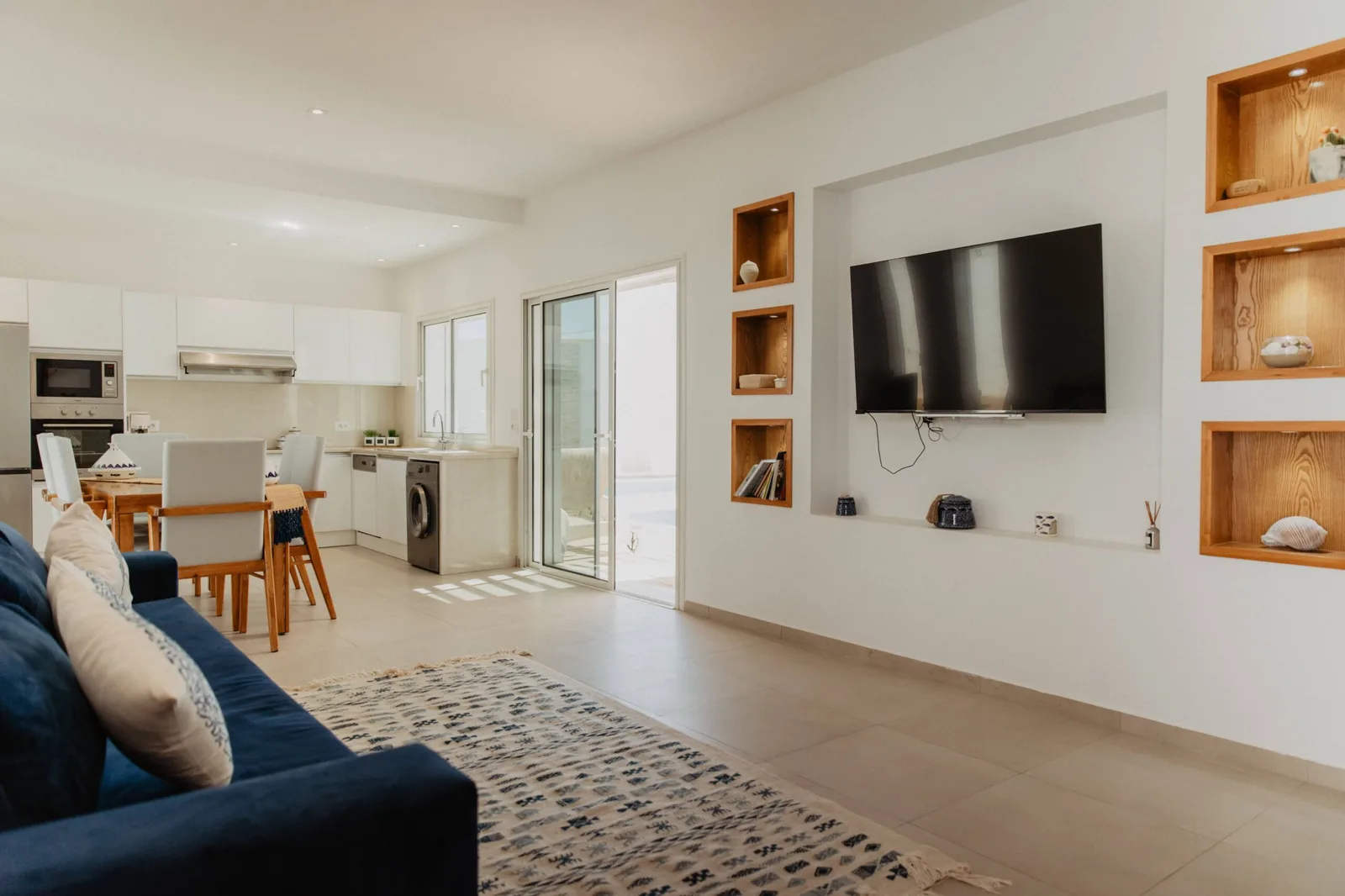
Ethic Village Djerba is a private family residence in Tezdaine, part of Midoun — “the palms” in Berber — and not a hotel. Over a longer family stay, that shows up in a few concrete ways.
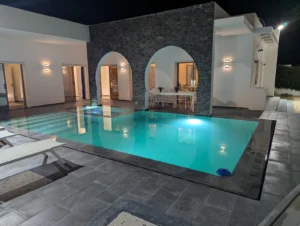
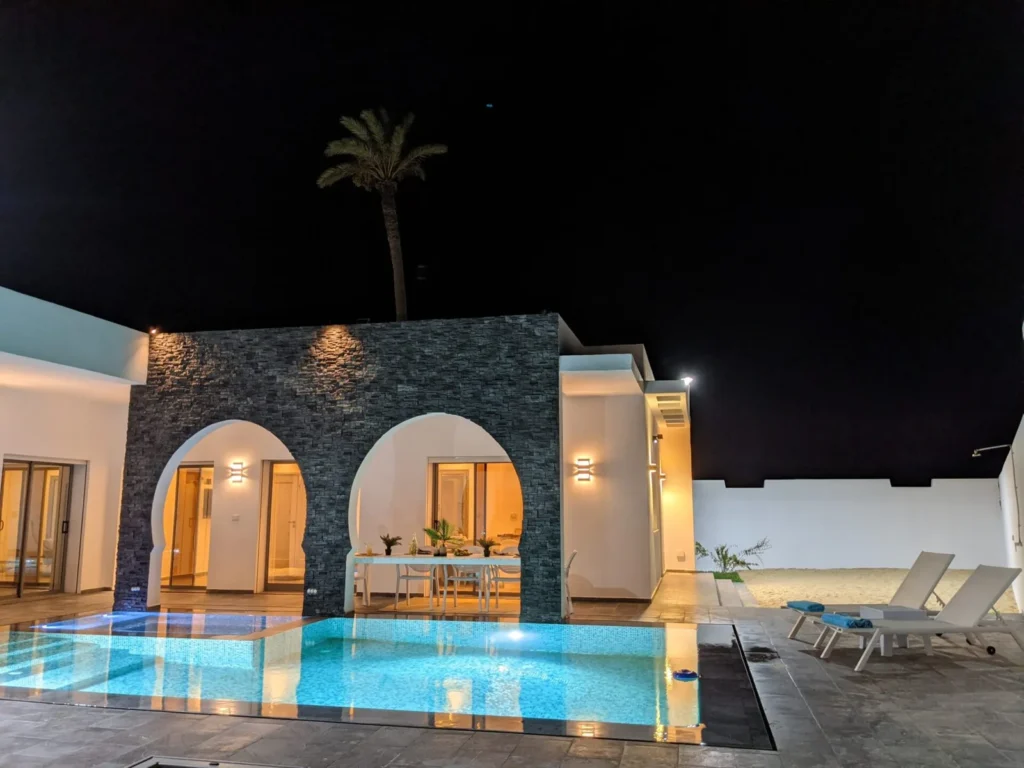
- Each villa has its own pool, not overlooked. No shared basin, no sunbeds to claim at eight in the morning.
- All four villas are single-storey, which is a genuine relief with toddlers and with grandparents alike.
- A kitchen of your own. Over twelve days, eating in every other evening changes both the budget and the pace.
- Room for the wider family. The villas Diamant and Saphir interconnect, as do the villas Opale and Jade: two families, or three generations, can stay together without living on top of one another.
- An alcohol-free house (house rules, no exceptions) and a prayer mat with the qibla marked in every villa. The Troujette and Khalid Ibn Al Walid mosques are a 5- and a 10-minute walk away.
On services: breakfast is offered as a basket you put together the evening before, with a budget of €1 per person per day, and we deliver it to your villa in the morning. The welcome meal and the cleaning on arrival and on departure are offered too. Ordered and paid for separately: half board, à la carte meals, anything beyond the basket budget, the airport transfer, pool heating, mid-stay cleaning and bike hire. The four villas, their capacities and their pools are compared on our all our villas page.
October sits outside high season: what that does to the budget
At Ethic Village Djerba, October is mid-season, which covers March to May and then October and November. Two effects stack up.
- The nightly rate is well below the summer one: €160 to €190 a night depending on the villa in mid-season, against €190 to €310 in July and August.
- A school break is long enough to reach the long-stay tiers. From 7 nights the rate drops by about 10 %, and by about 18 % from 14 nights. A half-term week clears the first tier on its own; a fortnight clears the second — without your having to stretch the stay.
We are not on Booking.com or Airbnb: book direct and no platform commission is added on top. To build a full envelope — flights, transfers, food shopping, days out — our article on the cost of a family holiday in Djerba breaks it down line by line.
Before you book Djerba in October with your family
October in Djerba does not offer what July offers: an island back at its own pace, a sea still mild, days you can spend walking, and a house to yourselves for a week or two. Check the sea and the sunset against the week you have in mind, then fix the flights around it — in that order, because the flights are the part that gets more expensive the longer you wait.
Dates falling awkwardly, or torn between two villas? Write to us and we will look at them with you.
We wish you a fine autumn, insha’Allah.