

Winter in Djerba isn’t really winter
While Europe sinks into grey skies, damp cold and short December-to-February days, Djerba keeps living at the rhythm of the sun. Days start early, end late, and terraces stay usable at almost every midday. For many European travellers, it’s the first discovery: a southern Tunisian Mediterranean winter feels much more like a mild autumn than a real winter. Olive trees stay green, bougainvillea still bloom, and the island settles into an almost total calm after the high season. For official figures, see Tunisian olive groves on UNESCO’s tentative list.
At Ethic Village Djerba, winter has become a season in its own right — a time when families, couples, retirees and remote workers come looking for what Europe no longer gives them for five months a year: soft warmth, light, and time that stretches out. See also long-term climate averages for Djerba.
Climate, month by month
December — the gentle transition
December always surprises travellers arriving from Paris, London or Brussels. Daytime sits between 18 and 22°C, nights around 10 to 13°C. Sun dominates: eight to nine days out of ten are bright, rain is rare and usually brief. It’s the ideal month for long walks, excursions and cultural visits without crowds.
January — the heart of winter
Djerba’s coldest month stays very mild: 17 to 21°C by day, 9 to 12°C at night. The sea drops to 16-18°C — too chilly for sea swimming, but the olive groves offer a striking, wide-open landscape. A light wool jumper and a thin jacket are enough in the evening; by day, a t-shirt and a cardigan are often too much.
February — light coming back
From the second half of February, the whole island shifts: yellow mimosas burst open, almond trees start to blossom, days climb back to 18-22°C. It’s a particularly well-loved period for photographers, walkers and families looking to travel before European spring holidays start.
What to do in Djerba in winter
The sea isn’t swimmable, but the island offers a richness of activities that the high season simply doesn’t allow — because there are fewer people, less heat, more space.
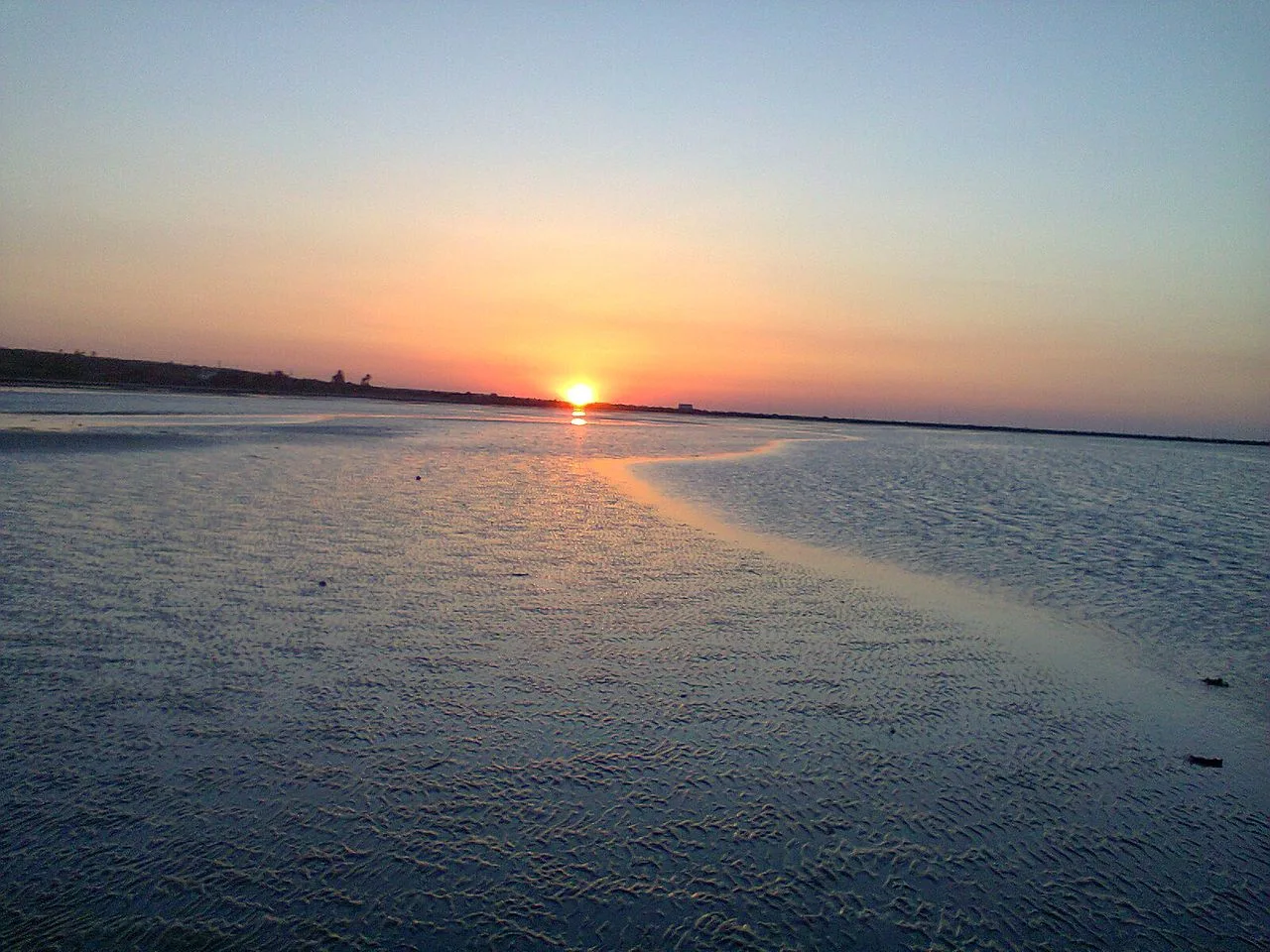
- Beach walks along Sidi Yati or Sidi Mahrez — kilometres of near-empty sand and low, warm light.
- Hikes through palm and olive groves around Tezdaine, Midoun, Mellita — often with the place to yourselves.
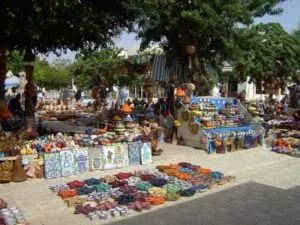
- Traditional markets: Houmt Souk on Mondays and Thursdays, Midoun on Fridays, Ajim on Tuesdays. Local produce, crafts, encounters.
- Excursions to southern Tunisia: Matmata, Douz, Ksar Ghilane. Winter is the only season where the desert remains accessible without suffering.
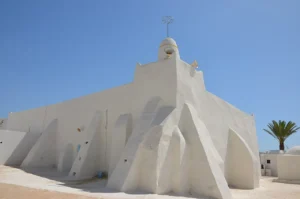
- Cultural visits: Djerba’s historical mosques (part of the island’s settlement pattern, inscribed by UNESCO in 2023), the heritage museum, the pottery workshops of Guellala.
- Heated pool (Villa Diamant, extra charge) for those who want to keep swimming despite the cool sea.
Djerba’s nature in winter — a different season
People often assume the southern Mediterranean goes quiet in winter. Djerba is the opposite: the island breathes, landscapes open up, and several natural moments are only visible at this time of year.
- Olive groves in full shape: harvest finishes in December-January, trees are groomed, fresh oil can be tasted directly at the producers.
- Mimosas in February — explosions of yellow along roads, in gardens, along the coast.
- Flamingos at Ras Rmel (the Flamingo Peninsula): easy sightings in January-February, early morning or late afternoon.
- Almond and prickly pear entering early bloom by late February.
Who travels to Djerba in winter
The winter crowd isn’t the summer crowd. Fewer families with school-age children, more adults looking for something else.
- European retirees: one to three months of wintering to escape damp weather. Dry climate, accessible medical care, reasonable cost of living, strong French-speaking presence.
- Remote workers: free, unlimited Wi-Fi on two 5G boxes from two different operators (if one drops, the other takes over), silence, natural light, private pool for the lunch break. A real workation without the noise of co-working spaces. Ahmed Redissi, our founder: “Pick up a SIM card with data at the airport — Orange has the best coverage at Ethic Village Djerba.”
- Couples: discreet honeymoon, anniversary, or simply a long weekend of calm.
- Families with young (pre-school) children — maximum flexibility, softer rates.
For deeper reading: see our long stay in Djerba guide and our Djerba off-season overview.
Off-season rates — clearly more accessible
Winter is the most affordable time of year. On Djerba, the market for private villas with pool sits between €50 and €150 per night in low season (November-March), against €250-400 in high season. At Ethic Village Djerba:
- Villa Opale or Villa Jade (2 bedrooms, up to 4-5 travellers): from €110/night, breakfast included.
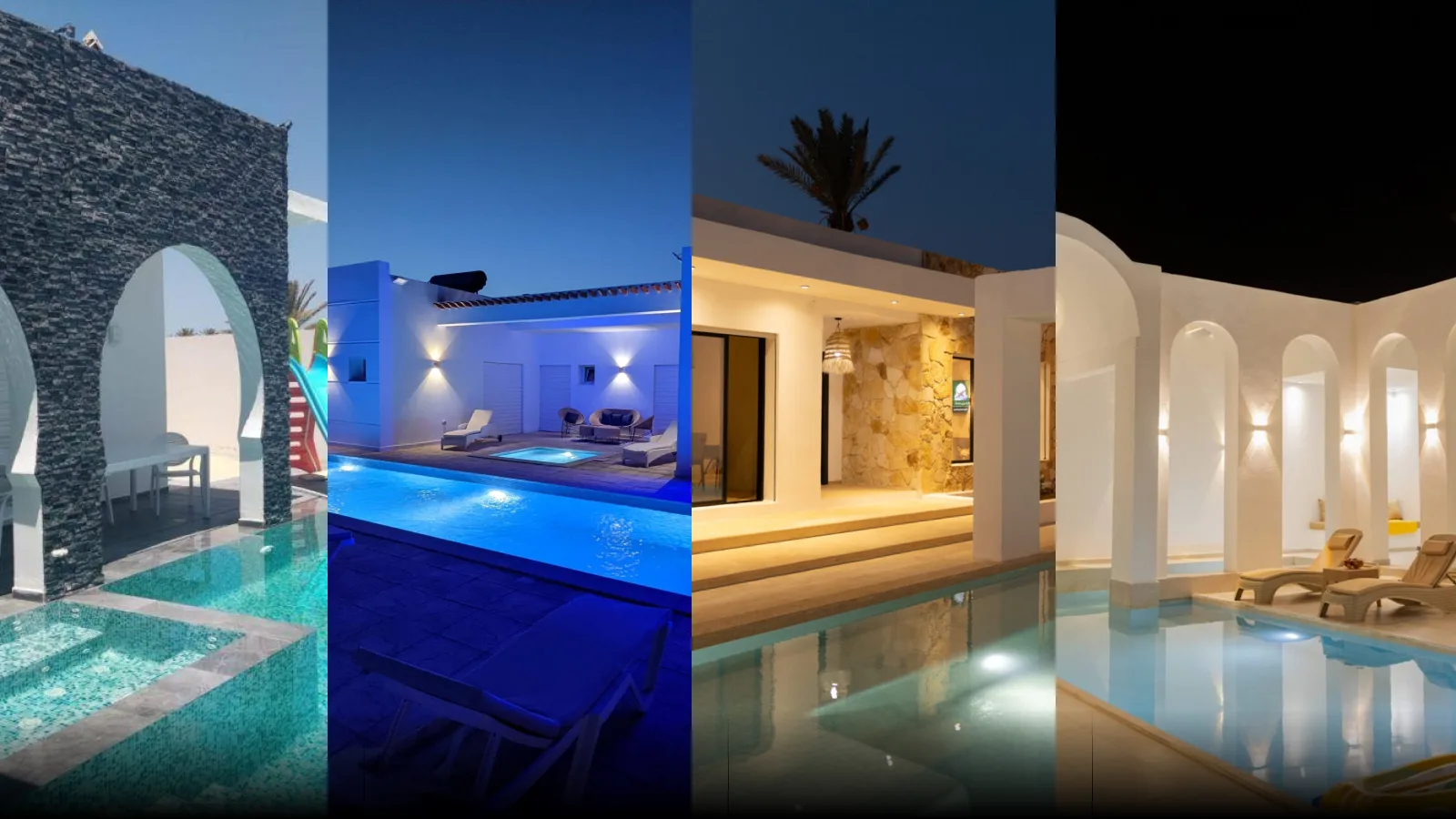
- Villa Diamant (4 bedrooms, up to 8 travellers, 8×5m infinity pool with jacuzzi): from €130/night, breakfast included.
- Long stays (low season): from 21 nights, from €65/night (Villa Jade); from 60 nights, from €55/night.
Paris-Djerba remains a direct flight of 2h45 to 2h55 (block time), all year round; from London, Lyon, Marseille, Brussels, Zurich or Geneva, connections also exist — check with your carrier. European citizens don’t need a visa for stays under 90 days.
Heated pool at Villa Diamant — the winter option
A 16-18°C winter sea puts off most travellers. For those who want to keep swimming, Villa Diamant offers an optional heated pool (extra charge, on request): the water can be kept at a comfortable temperature even in January. It’s a rare feature among private villas on Djerba, particularly popular with families with children or with retirees doing laps every morning. Important: only Villa Diamant has this option. Our other villas (Saphir, Opale, Jade) are designed for the warm season.
Related reading
If this article is useful, you’ll probably also enjoy:
- May-June in Djerba: the best time
- Family holiday in Djerba — practical guide
- Long stay in Djerba (1 to 3 months)
- Djerba off-season — the full overview
A quiet, discreet, Muslim-friendly winter
At Ethic Village Djerba, winter is lived quietly. Our villas are strictly alcohol-free (house rules, no exceptions), pools have no overlooking neighbours, two mosques are walkable (Troujette 5 min, Khalid Ibn Al Walid 10 min), and each villa provides prayer mats and a Qibla indicator. Our hospitality is Muslim-friendly — not a marketing label, a concrete commitment — and remains open to anyone who shares the same wish for intimacy, serenity and a setting shaped around our values.
Winter in Djerba isn’t a compromise on summer. It’s another season, with its own beauty — slower, brighter, quieter. One we happily recommend to anyone who wants to discover the island differently.