Good news for anyone planning a family holiday in Djerba: Tunisia remains visa-free for UK passport holders in 2026 — exactly as it was before Brexit. European travellers are in the same position, with most EU citizens able to enter for 90 days without a visa. That said, the rules around accepted documents changed in January 2025, and a few nationality-specific exceptions are worth knowing before you book. For official figures, see France Diplomatie Tunisia travel advice.
This guide covers the 2026 entry requirements for British and European travellers to Tunisia, including what changed after Brexit for UK passport holders, which EU nationalities have different stay allowances, and what to expect on arrival at Djerba Airport.
UK passport holders: 90 days visa-free, post-Brexit unchanged
Despite Brexit, British citizens have not lost any entry privileges for Tunisia. The UK’s bilateral relationship with Tunisia is governed by a separate agreement — one that maintains the visa exemption regardless of the UK’s departure from the EU.
Here is what this means in practice for a British traveller in 2026:
- Visa required? No — tourist entry is free for up to 90 days per visit
- eVisa or ETA required? No — there is no online system to complete before travelling. Tunisia launched a tender for an e-visa platform in 2024, but it was declared unsuccessful in August 2025; no system is currently in operation. (Note: this has nothing to do with ETIAS, which only applies to the Schengen Area.)
- Passport validity: your passport must be valid for the entire duration of your stay. Most airlines require at least 6 months’ remaining validity at the time of departure — check this before booking your flight
- Passport condition: a damaged or torn passport may result in refusal at the Tunisian border
- Proof of accommodation: border officials may ask for a booking confirmation — bring your reservation confirmation for Ethic Village Djerba
- Return ticket: advisable — authorities may ask to see a return flight or onward journey
This is unchanged from before January 2020. Brexit did not alter Tunisia visa rules for British passport holders. There is no ETA or eVisa requirement — nothing new to prepare on the paperwork front. The FCDO Tunisia travel advice page is the authoritative reference for up-to-date guidance.
British-Tunisian dual nationals
If you hold dual British-Tunisian nationality, the official FCDO advice is to enter and leave Tunisia on the same passport. Make sure both passports are valid before you travel.
European Union citizens: visa-free, with some nationality-specific differences
The vast majority of EU citizens enjoy a visa exemption for tourist stays of up to 90 days. There are a few practical differences depending on nationality.
The general rule: 90 days, passport now required
France, Belgium, Spain, Italy, the Netherlands, Portugal, Austria, and most EU member states: free entry for up to 90 days on presentation of a valid passport.
National identity cards (EU ID cards): while these were previously accepted for package tour travellers, the rules have tightened. Since 1 January 2025, Tunisian authorities require a passport valid for at least three months from the entry date. For independent travellers — as is the case for most families booking a private villa directly — a passport is now mandatory. An EU national ID card alone is no longer sufficient to guarantee boarding on flights to Tunisia.
Stay durations and conditions by nationality
| Nationality | Visa required? | Maximum stay | Document required |
|---|---|---|---|
| France, Belgium, Spain, Italy, Netherlands, Portugal, Austria… | No | 90 days | Valid passport (min. 3 months at entry) |
| United Kingdom | No | 90 days | Valid passport; no ETA / eVisa |
| Germany | No | 4 months | Specific bilateral agreement — exceptional duration |
| Greece | No | 1 month | Separate bilateral agreement |
| Bulgaria | No | 2 months | — |
| Cyprus | Yes | — | Visa required — notable exception within the EU |
| Switzerland, Norway, Iceland | No | 90 days | Non-EU but same regime as most Schengen countries |
Stays longer than 90 days: the long-stay visa
Thinking of spending more than three months in Tunisia — for a winter stay, an extended family visit, or remote working? The visa exemption only covers short tourist stays. Any stay beyond 90 days requires a long-stay visa obtained before departure from your country of residence.
- Where to apply: at the Tunisian consulate general in your country of residence (London, Paris, Berlin, Brussels, Geneva…)
- When: before you leave — this visa cannot be obtained on arrival in Tunisia
- Typical documents: application form, passport photos, valid passport, proof of accommodation in Tunisia (reservation, lease, invitation), proof of sufficient funds
- Consular fees: vary by consulate — check the current amount directly with the relevant Tunisian consulate
- Processing time: allow several weeks — submit your application at least 4–6 weeks before departure
For extended stays, see our dedicated guide to long-stay holidays in Djerba.
At Djerba-Zarzis Airport (DJE): what to expect on arrival
Djerba-Zarzis Airport receives direct flights from Paris, Lyon, Marseille, Brussels, Zurich, Geneva, London and Manchester (direct easyJet flights from the UK). Border formalities are straightforward:
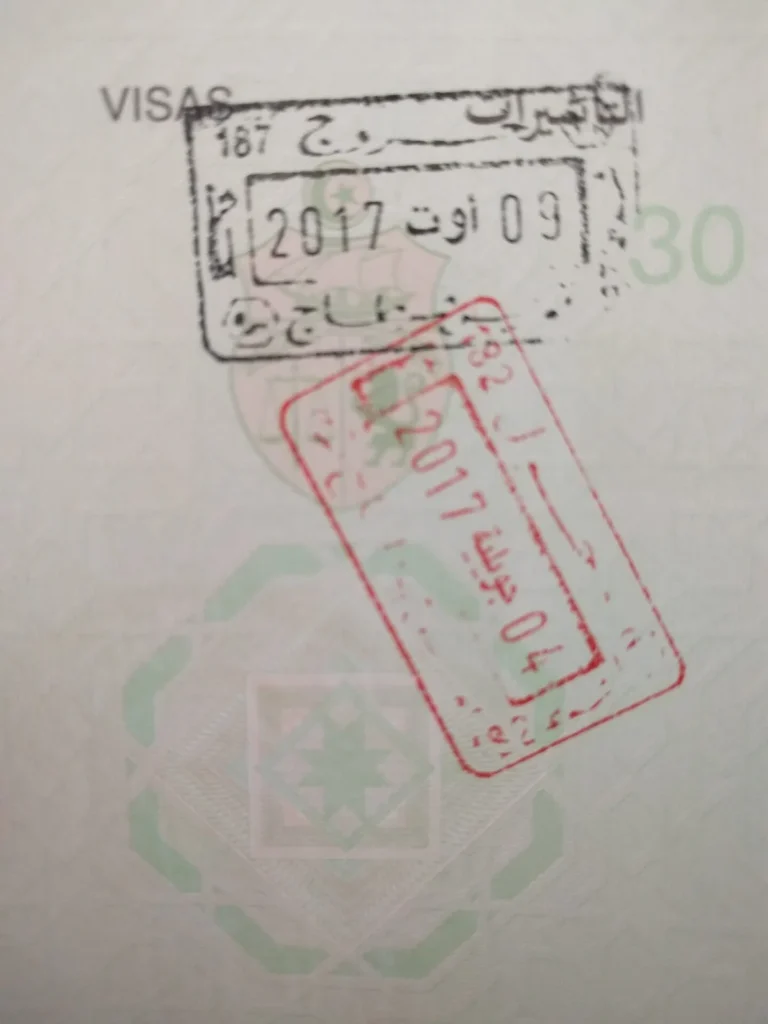
- Entry stamp: applied free of charge to your passport — it marks the start of your 90-day stay
- Passport control: officers may ask for your contact details, accommodation address and return ticket
- Currency declaration: if you are carrying more than 10,000 Tunisian dinars or the equivalent in foreign currency, a declaration is required. Keep your exchange receipts — you will need them to convert dinars back on departure
- Quarantine? No — there are no health-related entry restrictions in 2026
- Tourism tax: applicable in tourist accommodation (charged per night, capped at ten nights)
Once through arrivals, you can head straight to Tezdaine, a sought-after neighbourhood of Midoun — the name comes from Berber and means “the palm trees” — where Ethic Village Djerba is located. Allow 25–35 minutes from the airport depending on traffic. One tip from our founder, Ahmed Redissi, before you leave the terminal: “Pick up a SIM card with data at the airport. Orange has the best coverage on the Ethic Village Djerba grounds.”

Health: no mandatory vaccinations
No vaccinations are required to enter Tunisia. For extended stays, NHS Fit for Travel recommends Hepatitis A and typhoid as precautionary measures. Make sure routine vaccinations are up to date (including MMR for children). Djerba has private clinics, a regional hospital in Houmt Souk (around 20 minutes by car) and well-stocked pharmacies.
Common mistakes to avoid
- Passport expiring soon: check the expiry date before buying flights. Even though Tunisia officially requires only three months’ residual validity, most airlines will refuse to board you if your passport expires within six months. Renew early.
- Overstaying the 90-day limit: the exit fine is not trivial. Note your entry stamp date and plan your return with a comfortable margin
- Damaged passport: a torn, water-damaged or illegible passport may be rejected at the border
- Children travelling without both parents: additional documentation may be required (see the FAQ below)
- Not checking your nationality’s specific rules: Greek nationals only get 30 days, Germans benefit from 4 months, and Cypriot nationals need a visa
Practical FAQ — Your most common questions
Do UK citizens need a visa for Tunisia?
No. British passport holders can enter Tunisia without a visa for tourist stays of up to 90 days. No ETA or eVisa is required. This has not changed since Brexit.
Can EU citizens enter Tunisia with a national identity card?
For independent travel (villa or hotel booked directly), a passport is now mandatory since 1 January 2025. A national identity card alone is no longer sufficient to guarantee boarding on flights to Tunisia.
What is the maximum permitted stay?
For most EU and UK nationals: 90 days per visit. Notable exceptions: German nationals benefit from a bilateral agreement allowing 4 months. Greek nationals are limited to 1 month, Bulgarian nationals to 2 months.
What happens if you overstay the 90 days?
Overstaying without authorisation results in a fine payable on departure, proportional to the length of overstay. The fine can be paid at the airport or in advance at certain police stations.
Do children need their own passport?
Yes, every child needs their own individual passport. If a child is travelling without one of their parents or with a carer who is not their legal guardian, additional documentation may be required. Check with the Tunisian consulate in your country before departure.
Ready to plan your stay at Ethic Village Djerba? Get in touch — we are happy to answer any questions about your visit. Our How to Get to Djerba page covers flights and transfers in detail. For French-speaking families, our dedicated Tunisia visa guide from France covers Franco-Tunisian family specifics.