

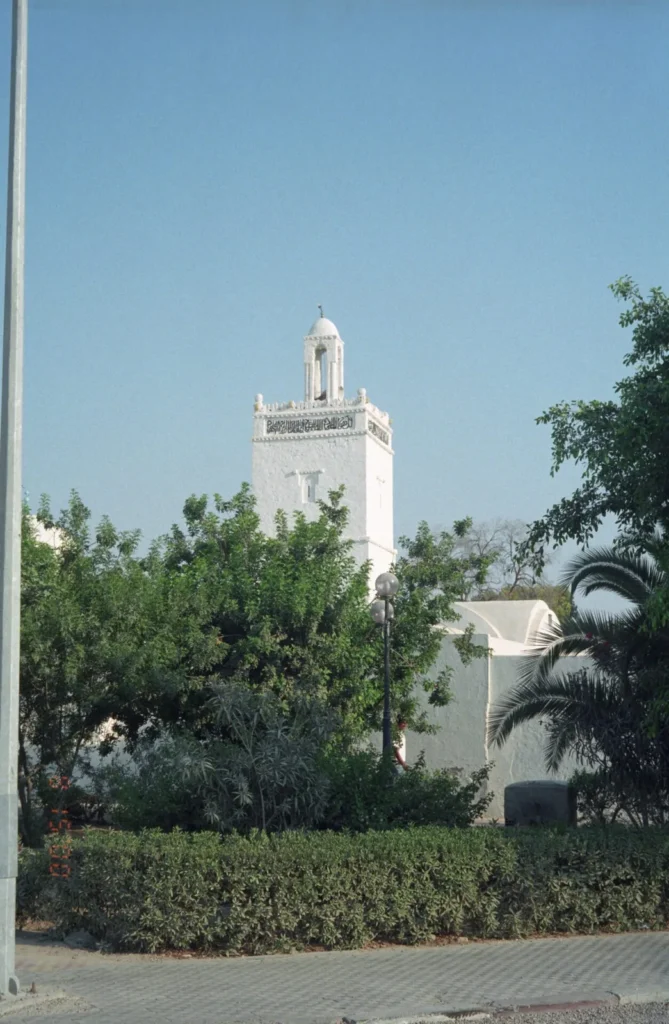
Djerba, a crossroads of religious traditions in the Mediterranean
Djerba is not an island like any other. Beneath its thousand-year-old olive trees and its whitewashed walls, two communities of faith have lived side by side for over two millennia: the Djerbien Muslims — many of whom follow the Ibadite tradition — and a Jewish community whose presence on the island traces back, according to tradition, to the destruction of the First Temple of Solomon. This living, understated religious heritage makes Djerba one of the most spiritually layered islands in the Mediterranean basin.
For families staying at Ethic Village Djerba, visiting this heritage is not just another sightseeing stop: it is an encounter with a long, quiet history that asks for respect rather than souvenir photos.
Ibadite Islam, a tradition rooted in Djerba since the 12th century
Ibadism is one of the major schools of Islamic jurisprudence, distinct from Sunni and Shia Islam. Present on Djerba since the 12th century, it has shaped the spiritual identity of the island. It is neither a sect nor a marginal movement but a recognised madhhab within the Muslim world, also present in Oman and in parts of North and East Africa.
Djerbien Ibadite tradition is marked by a striking sobriety: little ornamentation, a deep attachment to religious learning, and a discreet community life focused on the essentials. That restraint is visible in the architecture itself — white, compact mosques, sometimes as massive as small fortresses, always on a human scale. For official figures, see Djerba inscribed by UNESCO in 2023.
Fortress-mosques, a unique defensive heritage
Several of Djerba’s oldest mosques were designed to double as fortified shelters during seaborne raids. Thick minarets, windowless walls, built-in granaries: these buildings tell the story of an island that long had to defend itself, and that turned its places of prayer into the guardians of its people. This dual spiritual and defensive function is one of the most distinctive features of Djerba’s religious heritage.
Notable mosques to discover
The island is said to hold around 300 mosques. Listing them all would be meaningless — here are a few that capture the diversity of the heritage:
- Fadhloun Mosque (Midoun) — understated silhouette, squat minaret, an emblem of Djerbien Ibadite architecture.
- Sidi Jmour Mosque — on the western coast, in a mineral landscape, much photographed at sunset (visit without disturbing prayer).
- Louta Mosque — a former fortress-mosque, a witness to the defensive role these places of worship once played.
- Jamaa Erbaa Mosque — within the traditional urban fabric, another example of Ibadite sobriety.
- Khalid Ibn Al Walid Mosque — a 10-minute walk from Ethic Village Djerba, this is the mosque where many of our guests pray during their stay, for the five daily prayers and for Friday’s jumu’a.
For a wider overview of what to see on the island, you can also read our guide Family holiday in Djerba — practical guide.
El Ghriba and the Djerbien Jewish community
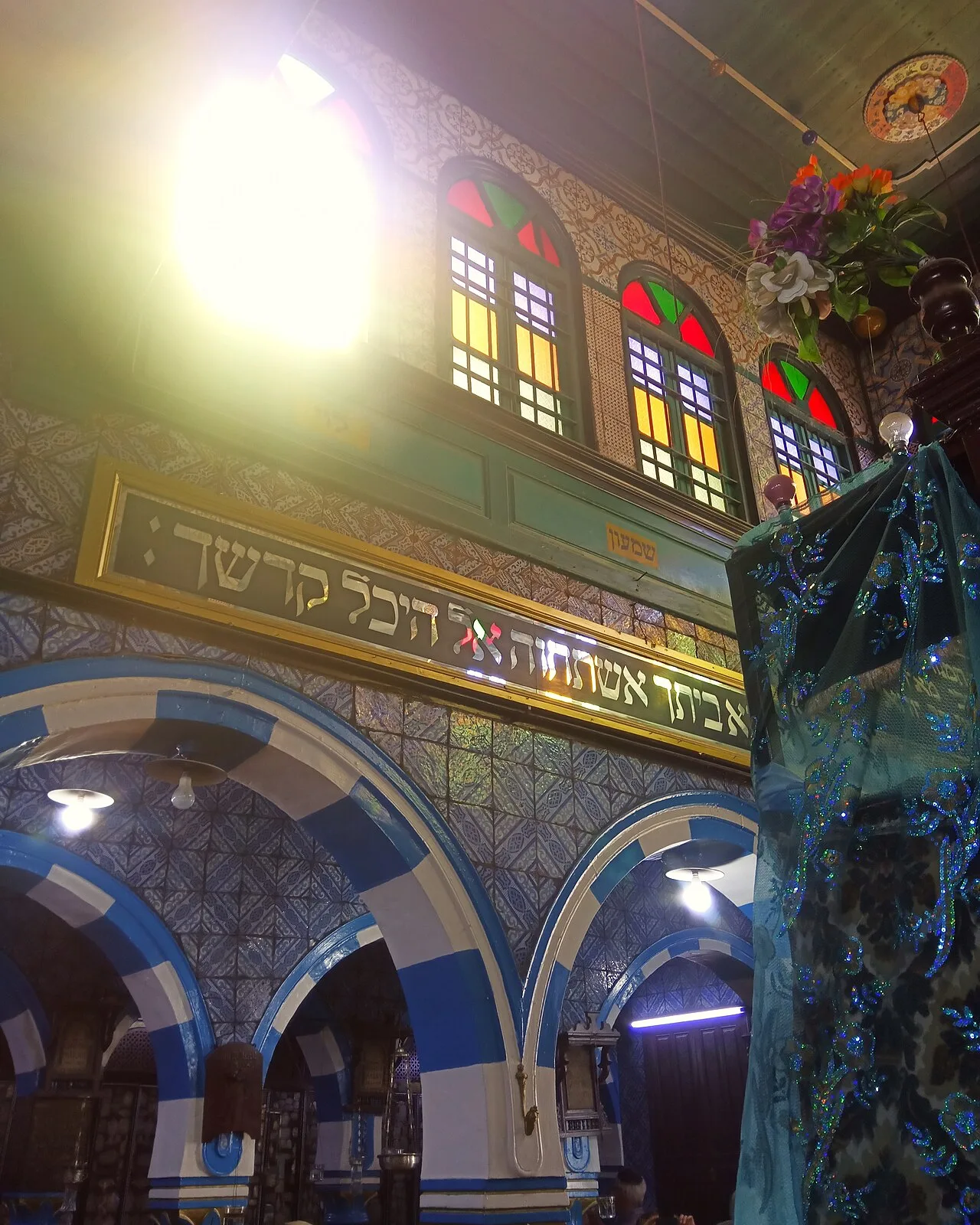
The El Ghriba Synagogue, in Hara Seghira (Erriadh), is traditionally considered the oldest synagogue in Africa — founded around the 6th century BCE, following the destruction of the First Temple of Solomon. It is one of the oldest continuously active Jewish places of worship in the world. See also Djerbahood project by Galerie Itinerrance (the original curators).
The Jewish community of Djerba has lived on the island for roughly 2,500 years. It is one of the oldest Jewish communities in North Africa, with its own liturgical tradition, its own domestic language, its silversmithing craft, and a deep bond to Djerba as a home — not merely as a stopover.
Every spring, El Ghriba hosts a traditional Jewish pilgrimage. In May 2023, that pilgrimage was struck by an armed attack in which several people lost their lives. Tunisian authorities have since significantly reinforced security at the site. We mention this soberly, out of respect for the victims and their families, and not to fuel fear: Djerba remains a safe island, and El Ghriba remains a living place of faith.
Visiting El Ghriba with respect
El Ghriba is not a museum — it is an active place of worship. Visits are possible outside services, in modest dress (shoulders and knees covered, head coverings provided at the entrance for men). Access may be restricted depending on the liturgical calendar or the security context — it is best to check on the day itself.
Our position at Ethic Village Djerba is simple: we do not present El Ghriba as a “tourist attraction” to tick off a list. It is a place of faith for our neighbours in the Djerbien Jewish community, which we respect as we would wish our own mosques to be respected. A quiet visit, without noise and without intrusive photography, is what is expected.
A thousand-year-old coexistence, rare in the world
What truly sets Djerba apart is not the Fadhloun Mosque alone, nor El Ghriba alone: it is the fact that they have existed together, for centuries, on the same island, a few kilometres from one another. Jewish and Muslim Djerbiens share a geography, a vernacular, daily gestures, and a cuisine that echoes between kitchens. This coexistence has not been one of conflict — it has been patiently woven through ordinary life, in markets, neighbourhoods and families.
That longevity bears witness to a rooted, tolerant strand of Maghrebi Islam — one that can live alongside others without compromising its own principles. It is also one of the reasons we love sharing Djerba with our guests: the island embodies a quiet model of coexistence that many places in the world have lost.
Visiting places of worship with adab
The Arabic word adab — bearing, courtesy, respect for the place — sums up better than anything what we ask of our guests during these visits:
- Modest dress: shoulders and knees covered, for men and women alike. A light headscarf is appreciated in synagogues and in some mosques for sisters.
- Shoes: removed at the entrance of mosques. Pack easy-to-slip-off sandals.
- Timing: avoid prayer times — dawn, midday, mid-afternoon, sunset, and early night. On Friday between 12pm and 2pm, mosques are reserved for jumu’a.
- Photography: never during prayer, never of worshippers in prayer, never with flash. In some places, interior photography is simply forbidden — ask first.
- Voice: speak in a whisper indoors. These are places of contemplation, not backdrops.
Everyday spirituality in Djerba
Beyond the landmarks, Djerba is also lived through ordinary spiritual rhythms. The call to prayer drifting through the alleys five times a day. Families gathering for iftar during Ramadan. The souk growing quieter after jumu’a. The long cooking sessions of Eid. The unhurried handshake, the steady gaze, greetings that take their time.
To explore this dimension further, you can read our articles Eid al-Adha in Tunisia — traditions of Djerba and Djerba, the Mediterranean’s best-kept halal secret. They complement this reading of religious heritage by placing it within the lived experience of Djerbien families today.
Staying at Ethic Village Djerba — a Muslim-friendly residence that honours the island’s heritage
We are not a hotel, and we do not brand ourselves as a “halal-certified” product — no such official certification exists in Tunisia. Ethic Village Djerba is a private family residence, Muslim-friendly, strictly alcohol-free, with a prayer mat and Qibla in every villa, and the Khalid Ibn Al Walid Mosque a 10-minute walk away for the five daily prayers.
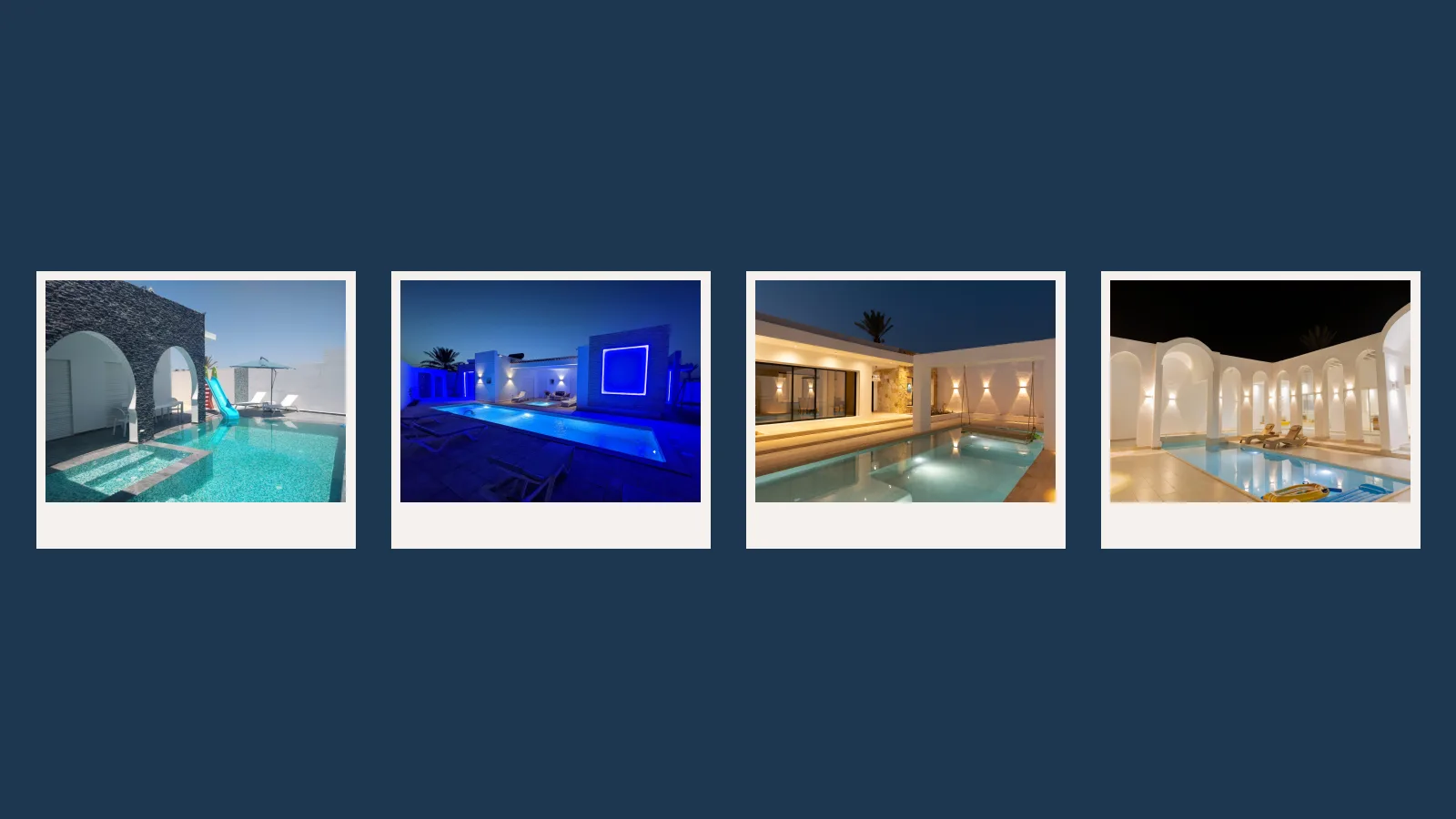
Each of our 4 villas has a private pool with no overlook, so that sisters can swim in full privacy — a rare comfort in Djerba, where most hotels serve alcohol and have not designed for this kind of privacy. Guests who wish to explore the island’s religious heritage find with us a discreet base, faithful to their values, a few minutes from the main sites.
To plan your stay, our pages Halal family holidays — private villa vs hotel and All our villas cover what we offer in detail. You will also find our guest reviews page, where our travellers describe in their own words what this kind of welcome means to them.
Discover: the must-see places in Djerba.
Read also: Ramadan on the island of Djerba.